Key takeaways
- Shotcrete is the umbrella term; gunite is the dry-mix version of the same placement method.
- Both can meet the same design target; verify the mixture, placement and curing rather than assuming equal finished strength.
- Rebound handling, cold joints, and curing practice are better quality questions than the process name.
- Lock the engineered shell geometry before excavation; agree placement logistics early and have the designer review any later method change.
Choosing by the process label alone can miss the evidence that a shell meets its design. Gunite is dry-mix shotcrete; wet-mix uses concrete mixed with water before it reaches the nozzle. This is a public-source comparison, not our testing, within the pool building process.
Scroll horizontally to read all columns.
| Check | Gunite / dry-mix | Wet-mix shotcrete |
|---|---|---|
| Mixing water | Most added at nozzle | Mixed before delivery to nozzle |
| Control evidence | Mixture record and nozzle water control | Mixture / batch record and placement control |
| Design strength | Can meet the specified target; verify placement and curing | Can meet the same target; verify placement and curing |
| Site plan | Agree rig access and delivery sequence | Agree pump access and delivery sequence |
Short conclusion: Specify the target and inspect the work; neither label establishes the strength of the finished shell.
What the two terms actually mean
ASA’s Winter 2022 FAQs discuss dry/wet interchangeability in concrete documents. Its Definitions of Key Shotcrete Terminology distinguishes where mixing water enters the dry and wet processes. Both are pneumatic placement methods. Its rebound guidance says bounced-off material and overspray should be removed from the structural shell; its pool curing statement explains the importance of moisture and temperature control. These are construction practices, not proof that a particular pool passed acceptance.
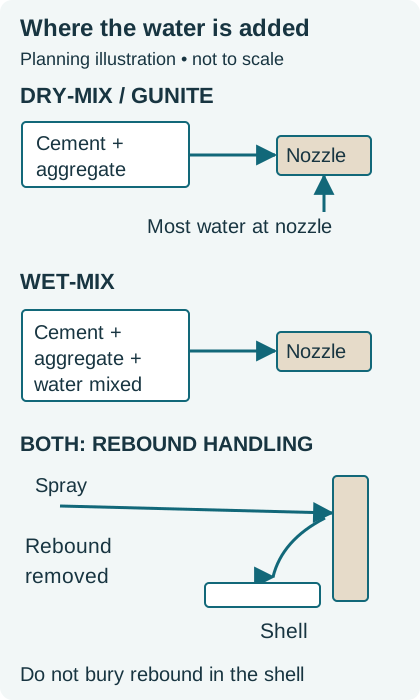
Takeaway: Record water-control, rebound-removal and curing evidence for the specified process.
The questions that actually predict shell quality
Ask for the documents and keep the corresponding acceptance records:
Scroll horizontally to read all columns.
| Quality question | Required project document | Record to retain |
|---|---|---|
| Thickness and strength | Engineered shell drawing and mixture specification | Thickness checks and specified test results |
| Rebound handling | Placement / removal plan | Inspection notes and photos before covering work |
| Joints after stopping | Approved construction-joint detail | Preparation and restart inspection |
| Curing | Project curing plan and assigned person | Dated moisture / weather / action log |
| Crew | Operator qualifications for the process | Qualification and supervision record |
Written answers to these five questions tell you more than the process name on the proposal. Record them in your project checklist next to the inspection dates.
Takeaway: Keep the inspection record with the written quality requirements.
Why the decision has a deadline
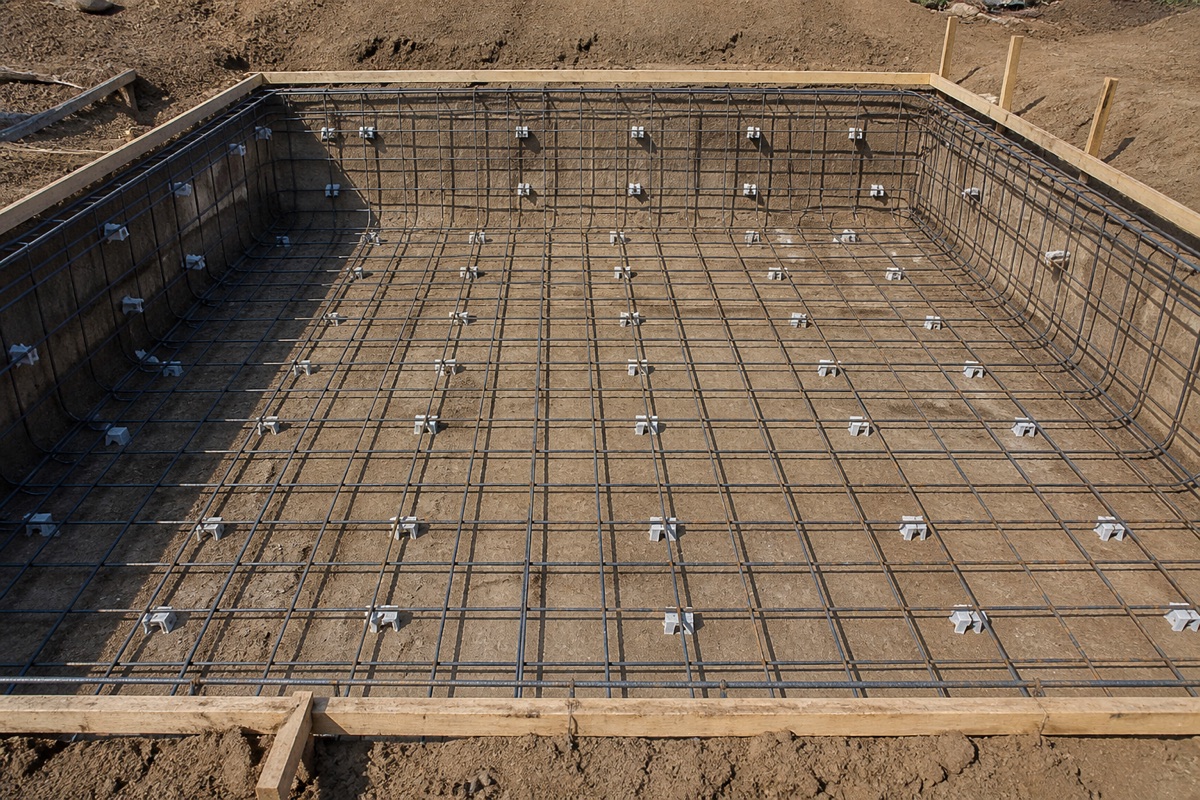
Fix shell geometry, reinforcement and penetrations before excavation. Agree the placement process and site logistics early, with any later change reviewed by the designer. The construction sequence shows where it lands. Steel spacing, plumbing penetrations, and vault walls are all detailed against the shell drawing. Changing the process does not automatically require new geometry, but neither can be changed without checking the approved design and affected work.
Takeaway: Ask the designer to review a process change against the approved shell and site plan.
What this comparison does not cover
Fiberglass and vinyl-liner pools avoid the question by replacing the shot shell with a factory vessel or panel walls. Their design and construction constraints require a separate comparison. The early coordination items still apply: equipment pad, cover, and drainage stay the same.
Frequently asked questions
Is gunite stronger than wet-mix shotcrete?
Neither process is inherently stronger. Compressive strength comes from the mix design, water control at the nozzle, placement technique, and curing. A well-shot dry-mix shell and a well-shot wet-mix shell can both meet the design target; a badly shot shell of either kind can trap rebound and voids.
What should I ask a builder about the shell?
Ask for the design thickness, the specified strength, how rebound is removed from corners and steps, how construction joints are treated if shooting stops, and how the shell will be cured. Ask who certifies or supervises the nozzle operator.
Does the choice change the rest of the project?
A process change may leave the engineered geometry unchanged, but the designer must confirm compatibility with the mix, reinforcement and placement plan. Agree access and delivery logistics early; a late change is not automatic approval to alter the shell.
Sources
- Definitions of Key Shotcrete Terminology, Position Statement 2 (2021) — American Shotcrete Association
- Misconceptions about Shotcrete (Fall 2016), rebound and overspray — American Shotcrete Association
- Curing of Shotcrete for Swimming Pools, Position Statement 7 (2021) — American Shotcrete Association
- Monolithic Shotcrete for Swimming Pools, Position Statement 5 (2021) — American Shotcrete Association
- Shotcrete FAQs (Winter 2022), dry-mix and wet-mix use in concrete documents — American Shotcrete Association