Topic guide
Custom Pool Design Decisions
Updated
Pool design here means the planning decisions that shape the vessel, the edge, and the way the pool will be used, not a portfolio of built projects.
Design decisions made after the shell plan can require rework. Record shape, spa arrangement, edge and depth with their construction and equipment interfaces.
| Decision | Input / impact to review | Guide |
|---|---|---|
| Shape | Parallel cover-track envelope and obstacles | Cover planning |
| Spa | Elevation, connection and shared/independent equipment | Pool and spa layouts |
| Edge | Track fixing, overflow and housing interfaces | Track types |
| Depth | Intended use, floor profile and approved design | Project checklist |
Shape is a systems decision
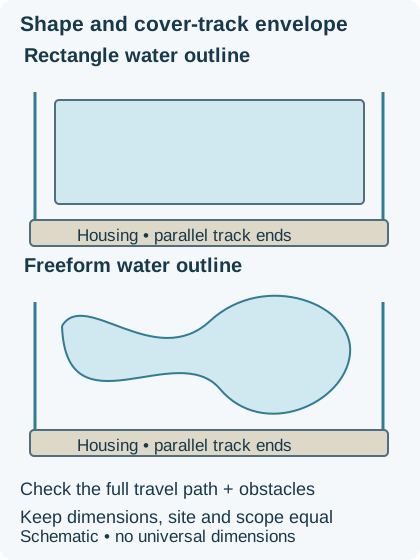
Compare rectangle and freeform proposals using the same dimensions, civil-work scope, equipment and site conditions; there is no universal cost winner. Appearance is a preference, while cover compatibility needs a documented layout. An automatic cover wants parallel track lines, so a rectangle keeps the system in the cover planning guide simple, while a freeform needs its enclosing track envelope verified. Sun shelves, benches, and depth transitions decide who uses the pool daily. Choose shape with the use answers from the planning guide in hand, not from a photo.
Coordinate spa systems
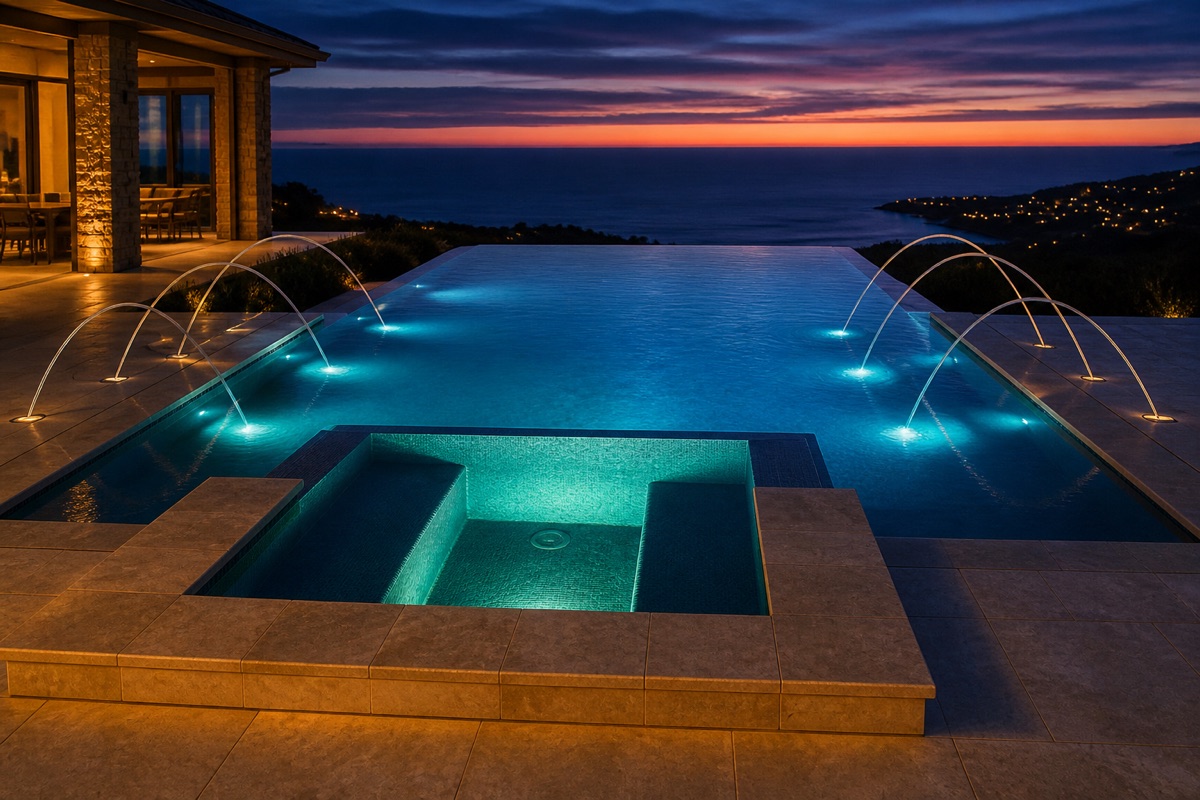
Adding a spa requires its own operating and connection decisions. Pool and spa combinations covers raised, flush, and spillover layouts, and what each does to plumbing, heater sizing, cover compatibility, and the safety fittings that code regulates. A flush spa may share a cover if the selected system permits the complete track envelope; a raised spa also needs a checked cover path.
Edges, depth, and the water line
For an overflow edge, have the designer confirm catchment, surge capacity, pump arrangements and supporting construction; no fixed relative cost is assumed. Depth is quieter and just as binding: diving, play, and laps want different floors, and the floor cannot be renegotiated after the shell. All of it lands in steel at the same stage of the construction sequence. That is the design deadline.
Design in a hard climate
Heat, wind, and dust change what a good design looks like. Assess cover use with local wind and humidity. EPA cool-pavement guidance relates surface temperature to material and climate; choose deck materials using representative surface temperatures, weather and shade rather than guaranteeing barefoot comfort from a pale color. The climate case is in pool design for hot climates. Surrounding structures belong in outdoor living.
Write the design down
Every choice in this hub should become a line on the new pool project checklist: shape and dimensions, spa layout, edge type, depths, and cover intent. Keep the decisions with the drawing revision.
Sources and method
Method: editorial decision map. The source list names the Save-T overview section and the EPA pavement page, with the date and limit of each. Checked October 8, 2026; verify current project details.
Project tool
Authority resource
New Pool Project Checklist
A printable planning checklist for a new inground pool, covering site, budget, construction, equipment, cover coordination, and handover.
1 guide
All custom pool design guides
Pool and Spa Combinations, Laid Out Properly
How attached spas affect pool design - elevation, spillover, shared or independent equipment, heating goals, cover paths and suction safety.