Key takeaways
- Raised / flush describes elevation; with / without spillover describes the connection. Record both.
- Heater selection follows water volume, target temperature, heat-up time and the planned operating modes.
- Check the full track envelope and obstructions; neither flush nor raised alone decides the number of covers.
- Spa suction and jet fittings are safety-critical items governed by code — specify compliant, listed fittings from the first drawing.
An unresolved spa connection can force changes to cover and equipment layouts. Plan elevation, spillover and operating modes separately in custom pool design. This page compares layout commitments, not tested running costs.
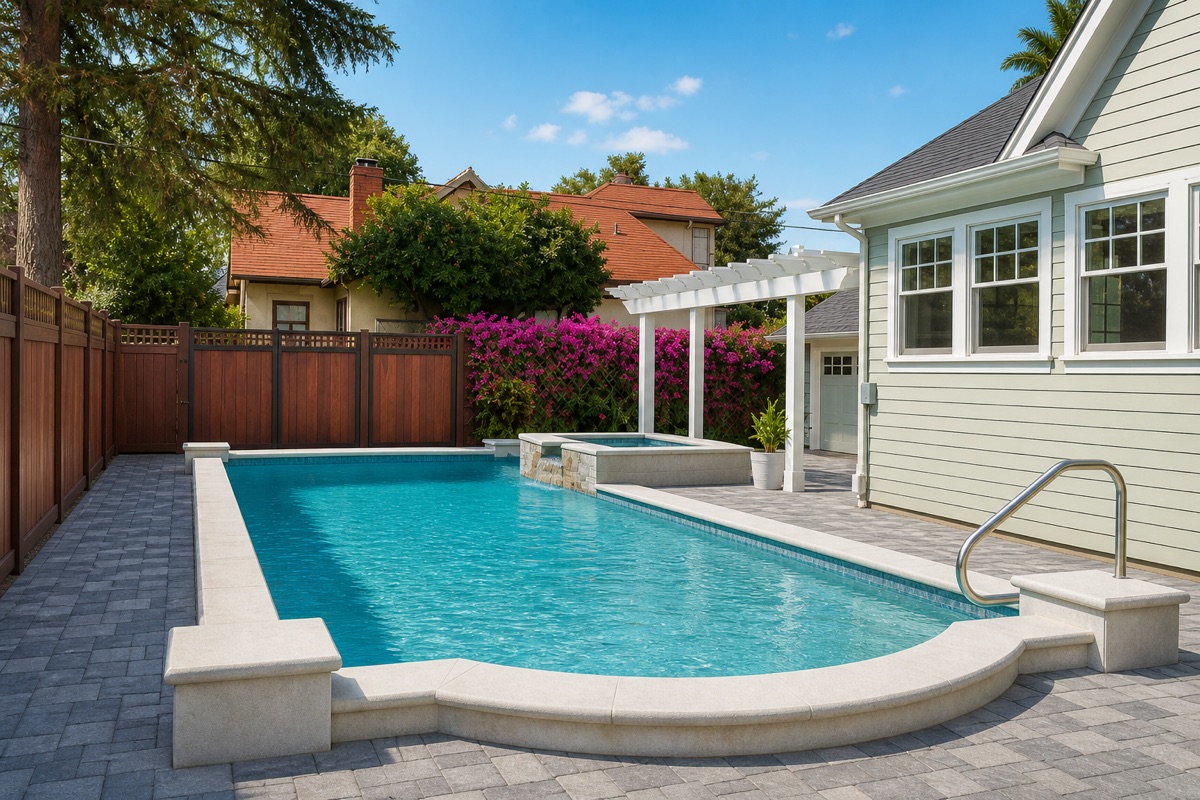
Elevation and connection are separate choices
Scroll horizontally to read all columns.
| Elevation | Without spillover | With spillover |
|---|---|---|
| Raised | Draw wall height, entry and separate water circulation | Also draw overflow level, destination and operating mode |
| Flush | Draw rim, entry and vessel separation | Also draw the connection and controlled flow path |
A flush rim is not inherently safer to enter. Review the actual steps or transfer method, support and wet-surface slip resistance. The U.S. Access Board’s accessible-entry guide illustrates lift, transfer-wall and transfer-system options for covered facilities; it is not a private-residential layout approval.
For covers, a manufacturer’s public track documentation and planning brochure show deck tracks outside the water footprint, including attached spa/step layouts. A shared cover needs a compatible parallel envelope, travel plane and housing; a wall crossing travel needs redesign or separate provision. Get an installer-confirmed plan and section through automatic cover planning.
Takeaway: Record elevation, spillover and cover-envelope compatibility as separate decisions.
What a spa does to the equipment plan
A manufacturer’s public IntelliTouch guide distinguishes shared and dual equipment systems. With shared equipment, intake and return valve positions select pool or spa circulation; a spillover mode is a separately configured flow path. Independent circuits need their own equipment and control records. Specify the arrangement on the equipment schedule and reserve its space in the pad layout.
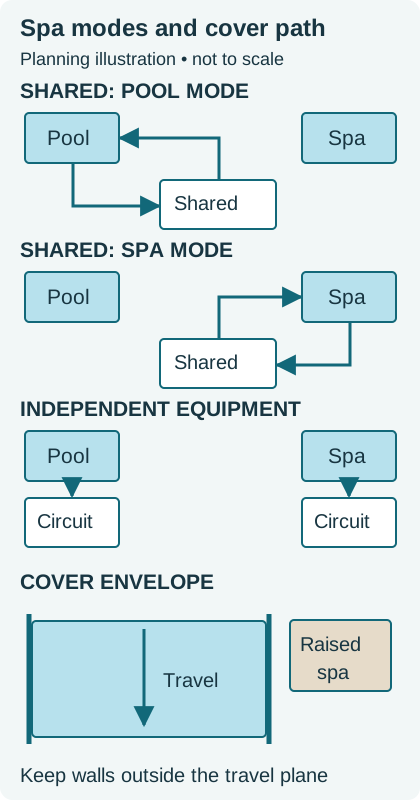
Compare heating with the actual volume, target temperature, heat-up time, use duration and cover schedule. EPA public commercial-pool guidance supports reducing evaporation with a cover; it does not prove a spa always costs more to run. Takeaway: Choose the operating modes before judging equipment or energy cost.
The safety line item
The U.S. Consumer Product Safety Commission’s Pool Safely safety tips warn against using a pool or spa with a loose, broken or missing drain cover. Record outlet-cover identification and hydraulic review on the first drawing; have the designer and inspector confirm applicable local requirements.
Takeaway: Keep suction fitting identification and the hydraulic review with the drawings.
Getting it built in the right order
Spa walls, benches, plumbing loops, and any spillover elevations are set at the steel-and-plumbing stage of the construction sequence. Record the layout choice, shared-equipment decisions, and fitting specifications in the new pool project checklist so the spa is designed as a vessel before it is built.
Takeaway: Confirm the spa mode and layout before the relevant structural and plumbing work.
What this page does not decide
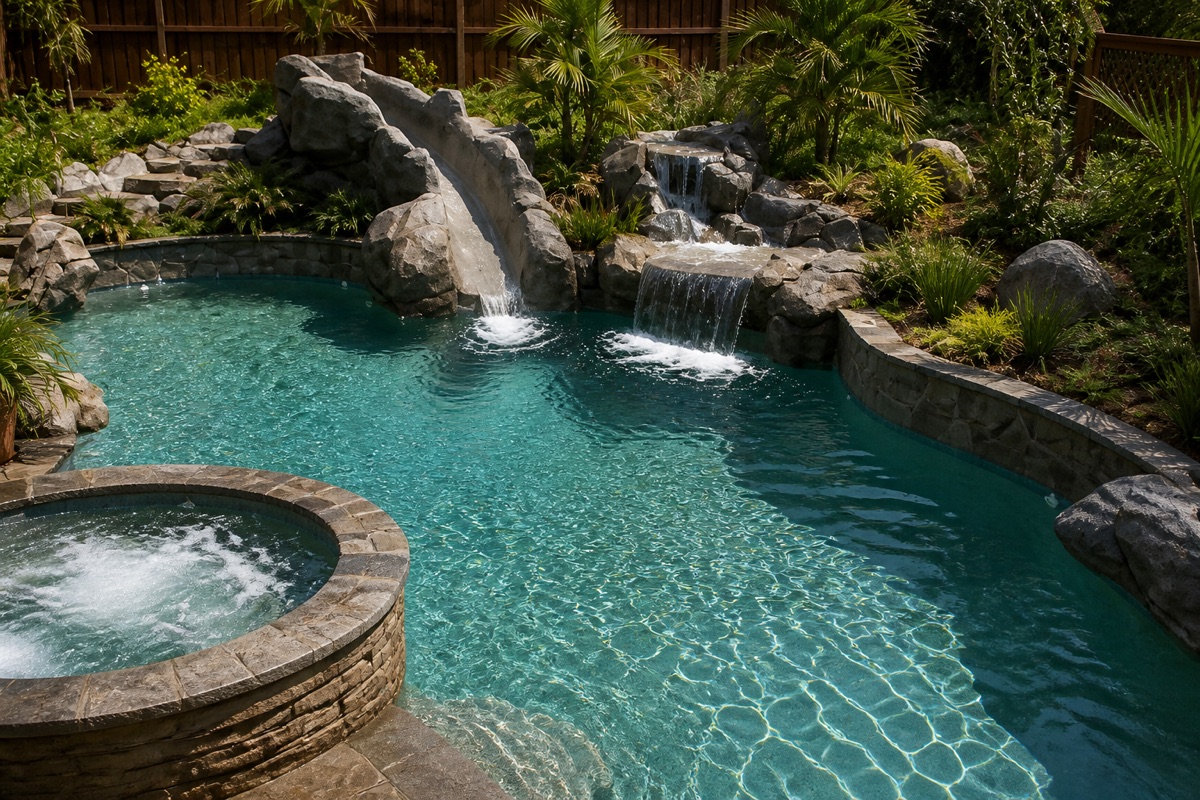
Seat access and jet arrangements need project design review; hydraulic sizing and fitting compliance need qualified technical review. This page is narrower: make the layout decision early, because the rest of the project inherits it.
Frequently asked questions
Does a spa share equipment with the pool?
A shared arrangement switches intake and return paths between the pool and spa; an independent arrangement has separate equipment circuits. Confirm heating, spillover and jet modes on the plumbing/control drawing rather than assuming either arrangement or a cost ranking.
Which spa layout works with an automatic cover?
A combined footprint may fit one deck-track envelope if all water and obstructions meet the selected system detail. A raised wall crossing travel needs a revised route or separate cover provision. A flush rim is not approval by itself; obtain the installer-confirmed plan and section.
Sources
- Track, Channel, and Coping Systems (undated public product documentation) — Cover-Pools
- Cover-Pools Dealer Brochure (2017), track and housing planning diagrams — Cover-Pools
- IntelliTouch Control System Users Guide, P/N 521075 Rev. C (February 2017), shared and dual-equipment modes — Pentair
- ADA Guide: Swimming Pools, Wading Pools, and Spas, accessible entry options — U.S. Access Board
- Pool Safely Safety Tips, Know Your Drains — U.S. Consumer Product Safety Commission
- WaterSense at Work 5.3: Commercial Pool and Spa Equipment (November 2023), evaporation and covers — U.S. Environmental Protection Agency