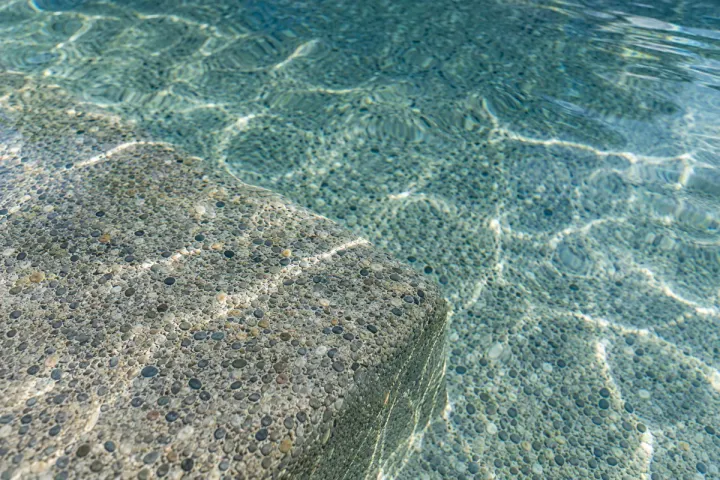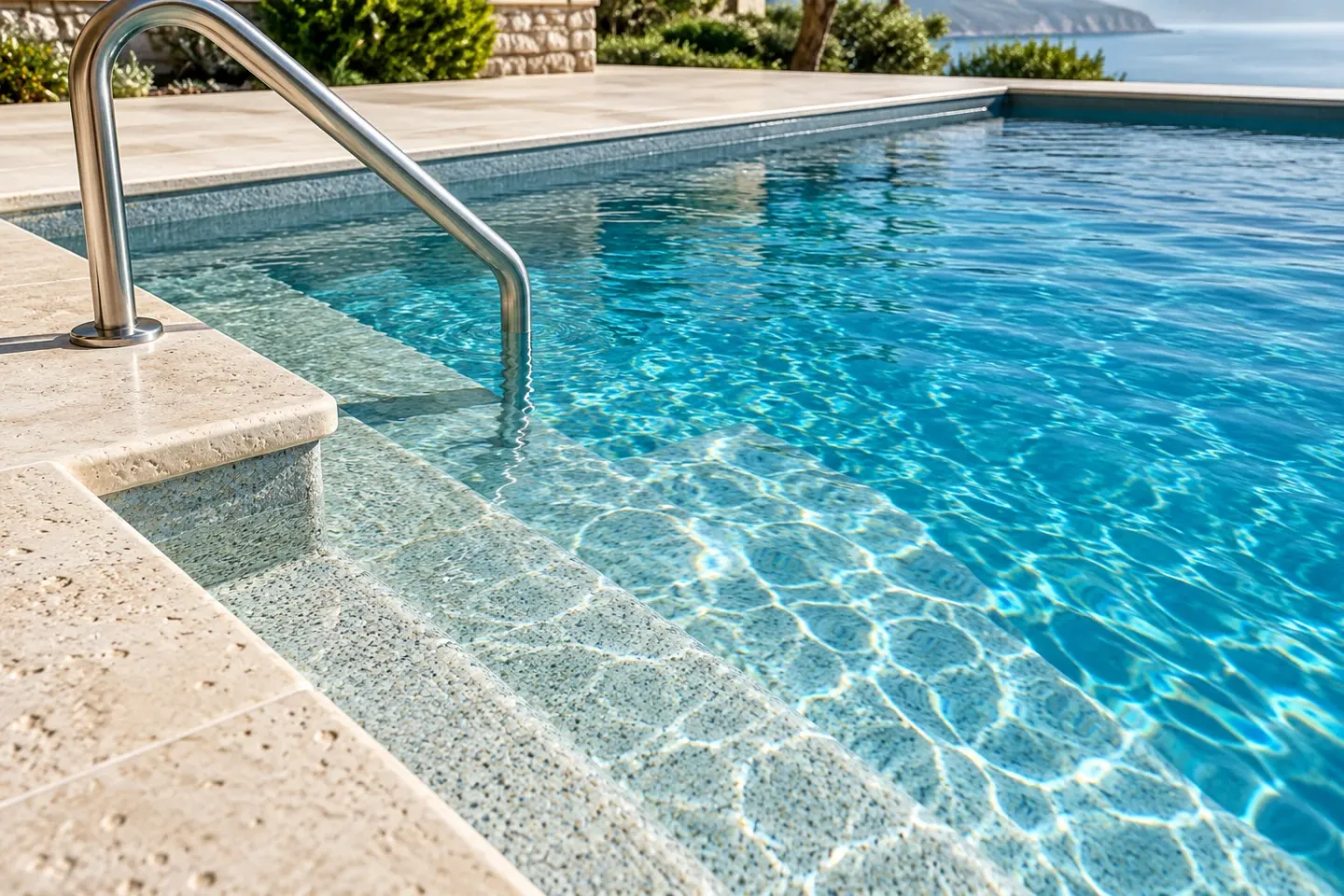
Saltwater pools use chlorine as a sanitizing agent. Salt chlorine generators generate un-stabilized chlorine from salt. Salt chlorine generator pools require the same diligent testing and balancing of pool water that is required with manual chemical additions.
For a saltwater pool vs chlorine decision, start with the materials you intend to keep or install. Work through the hardware, heater, interior finish and coping below, then take the completed checklist into your pool-planning discussion. For the wider material selection process, see our pool materials guide.
Compare the components before choosing
Use this checklist beside the proposed equipment and finish schedule. Fill in the exact product names and attach the relevant care instructions.
Scroll horizontally to read all columns.
| Component | For salt chlorination, ask | For manually added chlorine, ask | Keep with the project |
|---|---|---|---|
| Metal hardware | What does the maker specify for salt exposure and cleaning? | What does the maker specify for the pool location and cleaning? | Grade, coating and care instructions |
| Heater | What salinity does this exact model permit? | What water chemistry does this exact model require? | Model and water-contact materials |
| Interior finish | When can salt be added, and what ongoing care applies? | How should chemicals be introduced and water balanced? | Finish name, startup instructions and warranty |
| Stone coping | Has this stone been assessed for the proposed pool treatment? | Has this stone been assessed for the proposed pool treatment? | Stone identification and suitability assessment |
Metal hardware: grade, exposure and cleaning
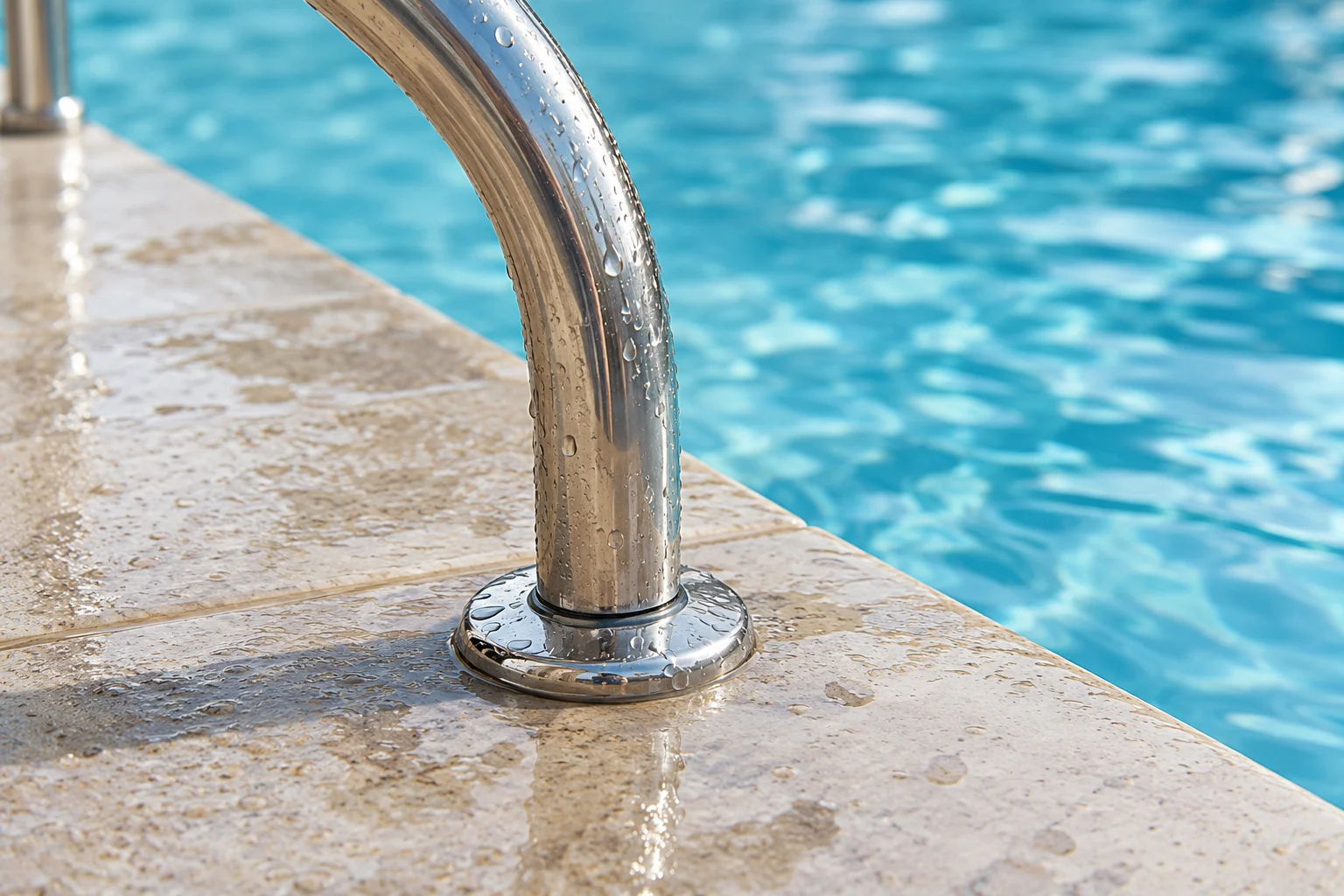
S.R.Smith’s aquatic-lift guidance explains that chlorides from dissolved salts will break down the passive (protective) layer of stainless steels and aluminum. For S.R.Smith aquatic lifts, metal components that are not powder coated, including hardware, are more susceptible to corrosion and staining.
Read the exposure classification
In S.R.Smith’s aquatic-lift maintenance classification, outdoor non-salt pools away from coastal regions are mild to moderately corrosive. Its aquatic-lift maintenance table classifies inland outdoor salt pools as Moderate for corrosion. The same table classifies coastal outdoor pools as Severe for corrosion under either chlorine or salt chlorination.
Mark the pool’s location on the hardware schedule and request the care instructions for each selected component.
Specify the stainless application
For the immersed or drenched applications covered by BSSA, Type 316 is strongly preferred for its greater resistance to staining, pitting and crevice corrosion in the majority of pool conditions. For infrequently cleaned, safety-critical load-bearing pool-hall components, BSSA reports that Types 304 and 316 have been found susceptible to SCC in laboratory tests and some swimming pool atmospheres.
Keep the application description with the grade specification. Review the selected rail or fitting separately from overhead supports.
BSSA’s pool-building maintenance guidance says all stainless steel items around the pool should be washed down daily. Carbon steel brushes or carbon steel wire wool should never be used on stainless steel.
Put lift care on the maintenance schedule
For S.R.Smith aquatic lifts:
- Lift equipment installed on salt water pools or located in coastal regions should be rinsed daily with fresh water.
- For lifts on salt water pools or in coastal regions, more thorough cleaning with soap and warm water is recommended weekly.
- Do not use: chloride containing cleaners on metal components, abrasive cleaners, or steel wool.
Heater compatibility: read the exact construction
Ask for the heater model and the materials of its water-contact components. Compare the proposed unit’s salinity and water-chemistry instructions with your chlorination plan.
Hayward describes cupro nickel as a copper-nickel alloy that resists erosion and corrosion caused by occasionally aggressive poor water chemistry. Coates salt water heaters use Copper-Nickel tanks and Titanium heating elements for increased corrosion resistance in water with a salt concentration of up to 3500ppm.
Record the Coates limit beside the Coates product entry. For another heater, enter that model’s own stated limit. Use our pool equipment guide to continue the equipment review.
Interior finishes: separate startup from ongoing care
New PTI finishes
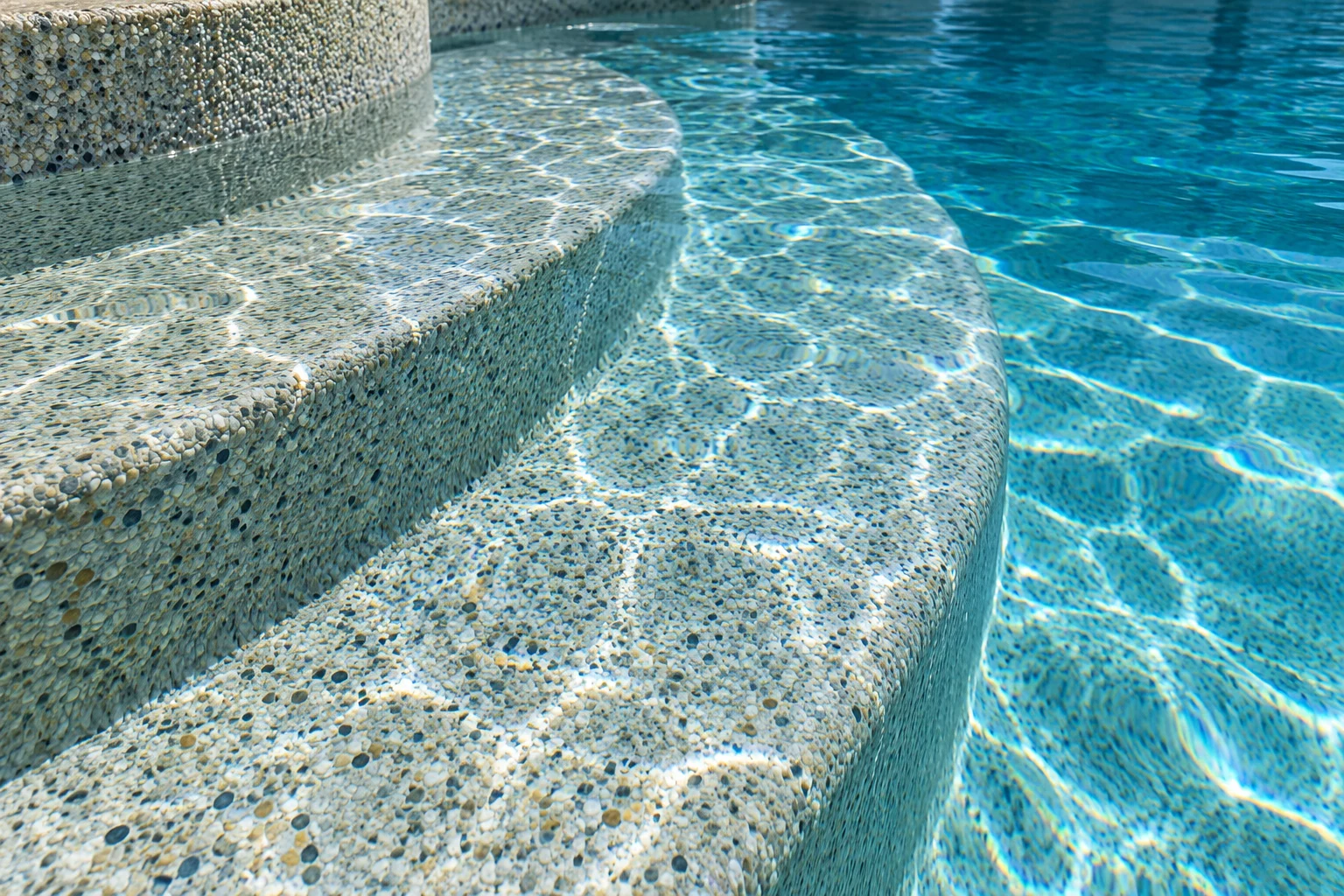
For a new PTI finish using a Saltwater Chlorination Generator System, wait at least 28 days before adding salt to the pool. PTI says salt left on the finish surface may scale, stain or discolor the finish and is not covered by the warranty.
Put the finish installation and salt-addition dates on the startup record. Read the selected finish’s startup instructions before commissioning the generator.
Water balance and finish care
Salt chlorine generation can also result in a higher pH level. High pool pH can cause scaling. PTI Recommended Acceptable Range is designed for high-performance finishes and not recommended for traditional pool plaster.
Use the care schedule for the selected finish when recording test results. Continue the finish selection in our pool plaster types guide or pebble and quartz comparison.
Vinyl liners
Out-of-range chemistry can cause vinyl liner wrinkling. Out-of-range chemistry can cause vinyl liner color loss or staining. For vinyl liners, you must avoid local accumulation of sanitizers in direct contact with the liner. These local sanitizer accumulations can create much higher chlorine levels than what exists in the rest of the pool.
Review the chemical-addition procedure alongside the liner’s care instructions, whichever chlorination method you select.
Fiberglass pools
Latham’s fiberglass pool warranty states that improper water chemistry/corrosive water can cause damage to pool surfaces, pool equipment, pool decks, and bathers. Latham directs owners of pools with an SCG to follow the SCG manufacturer’s guidelines.
Keep the fiberglass pool warranty and generator instructions together in the owner’s handover packet.
Stone coping: follow the water and drying areas
All natural stone, whether porous or otherwise, has the ability to transport moisture via natural capillaries between the constituent grains and/or crystals, and with it, dissolved salts. Wherever the pool water falls upon the stone or is drawn through it due to capillary action, as drying occurs, the dissolved salts may concentrate and eventually precipitate. Precipitating salts sometimes result in staining and may also be detrimental to the stone.
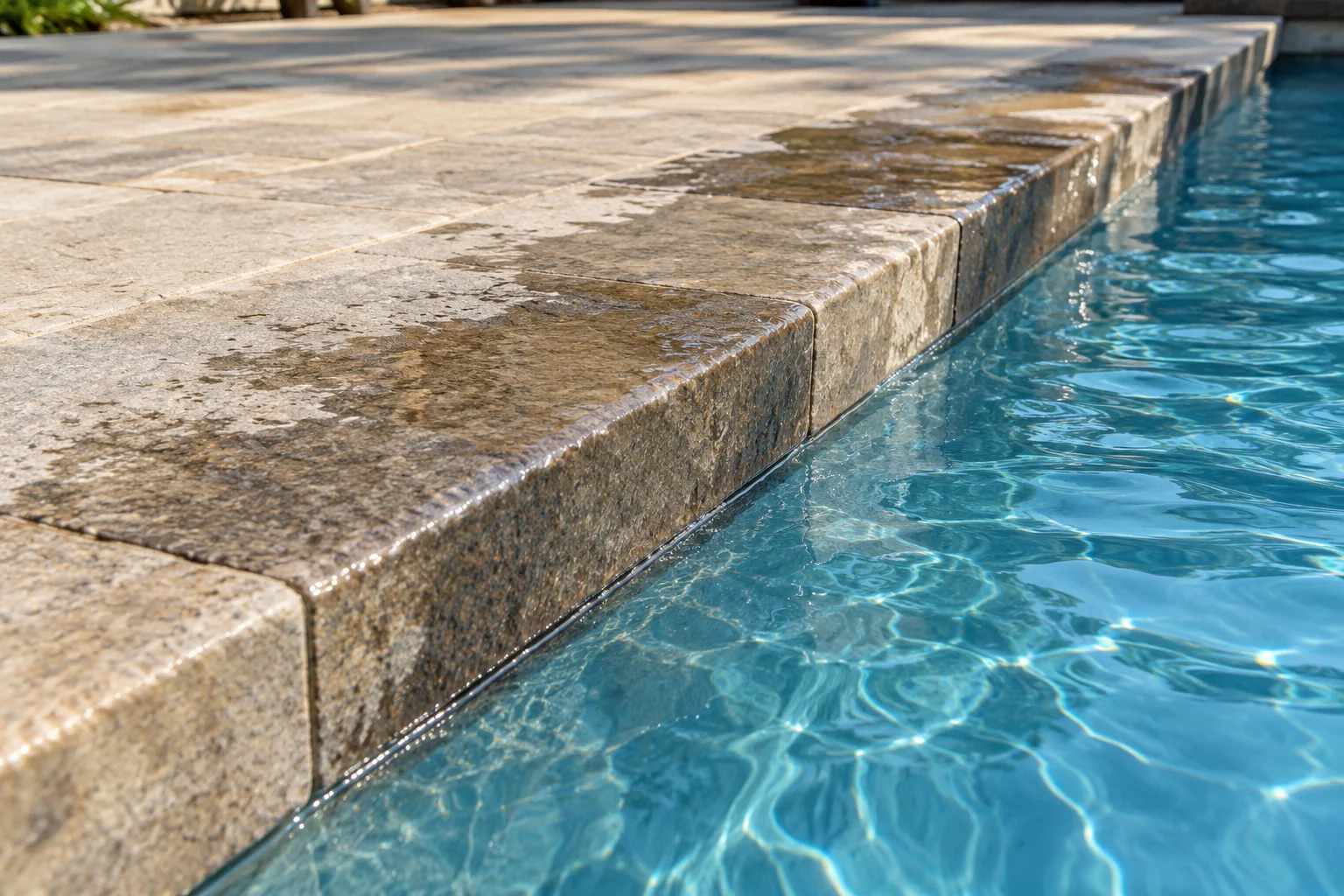
The individual merits of a stone should always be considered before use.
Record the stone’s identity and its suitability assessment for the proposed pool treatment. Include photographs of the coping and waterline in a conversion review.
Complete your materials decision
Before selecting salt chlorination or continuing manual dosing, assemble:
- The proposed chlorination equipment and its operating instructions.
- A hardware schedule identifying each component, grade, coating and cleaning routine.
- The heater model, water-contact materials and permitted water conditions.
- The interior finish name, startup record, ongoing care instructions and warranty.
- The coping stone identification and pool-use assessment.
Compare each proposed change against that packet. Resolve open material and care questions before placing the equipment order, and use the pool materials guide to complete the broader selection.
Sources
- CFFA — Understanding Your Saltwater Generator
- S.R.Smith — Aquatic Lift Maintenance
- BSSA — Stainless steels for swimming pool building applications
- Hayward — Cupro Nickel sell sheet
- Coates Heater — Salt Water Heaters
- Pebble Technology International — Pool Care Instructions
- Pebble Technology International — SWCGS Start-Up and Maintenance
- Continental AG / CFFA — Bleaching by chlorine
- Latham — Fiberglass Pools Limited Lifetime Warranty
- Stone Federation Great Britain — Natural Stone Swimming Pools