Key takeaways
- Geometry decides retrofit feasibility - parallel track lines and end-of-pool housing space are the two hard requirements.
- Surface, recessed and concealed tracks require different deck and edge details; confirm the chosen layout.
- A deck-mounted housing may be an alternative to a buried vault where its footprint and service access fit.
- If the deck or coping is being replaced anyway, the retrofit graduates into a remodel with options reviewed against the altered structure.
Ordering before checking the site can mean deck rework. A retrofit needs a coverable envelope and a workable housing, deck and route layout, and the cover planning principle still applies: geometry first, catalog second.
What makes the existing pool feasible?
Use this as a site-screening record, then have the selected system’s installer confirm the measurements.
Scroll horizontally to read all columns.
| Check | Direct installation candidate | Needs alteration | If alteration is impractical |
|---|---|---|---|
| Parallel envelope | Tracks enclose all water and clear obstacles | Relocate obstacles or revise the layout | Compare another cover type |
| Both deck strips | Installer confirms base, anchors and clearance | Repair or rebuild the track support | Reassess cover choice |
| End housing | Roll, lid and service access fit | Create a bench or recess space | Use a different housing or cover |
| Drainage | Selected detail has a workable discharge | Redesign the drainage route | Defer installation |
| Pipe / power paths | Approved routes remain accessible | Coordinate trenching or rerouting | Compare a system that fits the site |
Takeaway: A rectangle alone does not approve the deck, housing or drainage.
What retrofits typically use
A manufacturer’s public track documentation describes deck-mounted tracks running parallel outside the pool and recessed flush tracks set into the deck. The same manufacturer’s planning brochure shows undertrack beneath overhanging coping, with provision before construction. These are layout examples, not a recommendation or a finding from our testing.
Surface tracks need the installer to verify the existing deck and fixing detail. Recessed tracks need a compatible channel and deck work. Concealed undertrack needs the specified coping or wall channel; an existing edge may need rebuilding. Compare the details in track types before selecting a finish.
Drive choice works the same as on a new build. The trade-offs are in hydraulic vs electric. On a retrofit, conduit and hose routes must cross a finished site, which often decides the question.
Takeaway: Ask for the track fixing and housing detail before accepting a retrofit route.
The remodel threshold
If coping, deck, or plumbing work is already planned, fold the cover into that project. An open deck may permit recessed tracks, concealed edge work or a buried route. Compare the extra work with a surface system; opening the deck does not guarantee either a finish or a cost. The decision framework is in the renovation hub.
Takeaway: Compare the surface installation with the planned deck work before committing to either.
Doing it properly
Whatever the route, the sequence is the same. Measure the pool the way the installer will (the measurement guide covers what actually gets measured), then work the cover coordination checklist against the existing coping, drainage, and power situation. Check evaporation, debris and access-control claims against the selected cover documentation; safety ratings belong to that product and configuration.
Frequently asked questions
Can a freeform pool get an automatic cover?
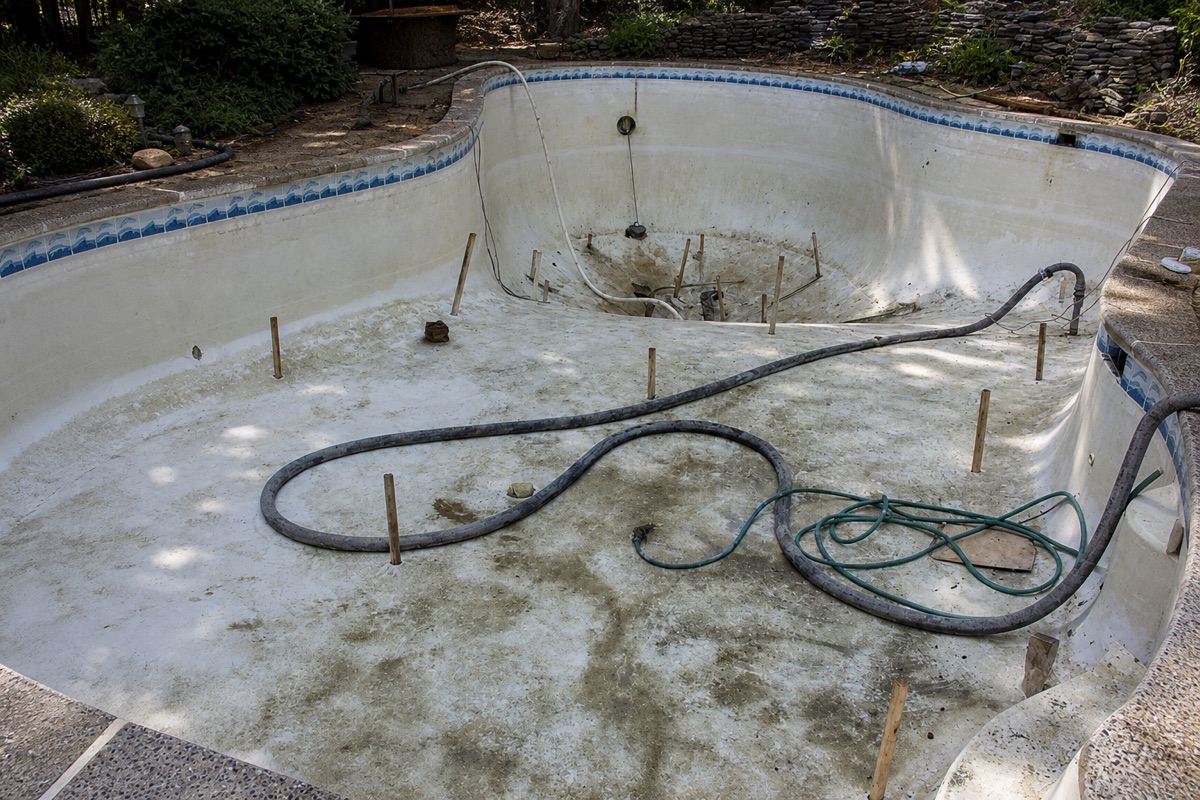
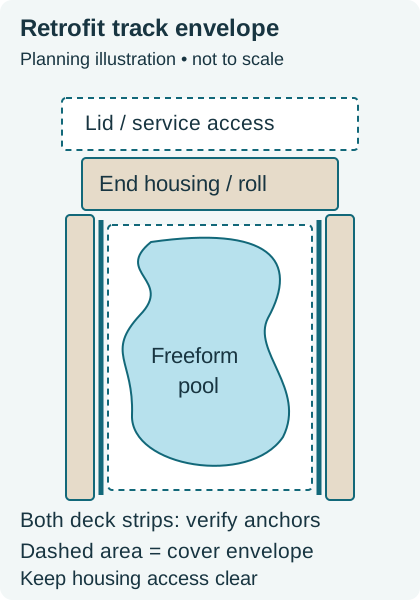
Sometimes, after a system-specific site assessment. The track must run in straight parallel lines wider than the water at every point, so a freeform needs deck-mounted tracks outside the curves, a wider system, and more visible hardware. Have the installer compare the documented envelope with a different cover type or the proposed remodel.
Where does the cover roll live if there is no vault?
At the mechanism end in the selected system's housing. A deck-mounted bench may fit where a buried vault does not; compare its roll space, lid, service access and drainage with the site before ordering.
When is a retrofit the wrong call?
When the pool needs edge or deck work soon anyway. Installing into a deck that is due for replacement can duplicate work. Compare a surface installation now with coordinated edge and deck changes during the remodel; access, finish and cost depend on the project.
Sources
- Track, Channel, and Coping Systems (undated public product documentation) — Cover-Pools
- Cover-Pools Dealer Brochure (2017), track and housing planning diagrams — Cover-Pools
- Hydramatic Toptrack Installation Manual (2007), bench, hose and control layout — Aquamatic
- WaterSense at Work 5.3: Commercial Pool and Spa Equipment (November 2023), evaporation and covers — U.S. Environmental Protection Agency