Key takeaways
- The cover spans the track lines, so track length and spacing are the primary dimensions, not the waterline.
- Diagonals are one cross-check; also verify corresponding endpoints, parallel tracks, side lengths and angles.
- Housing space, obstructions, and elevation changes decide feasibility as much as length and width do.
- Measurements belong on a labeled sketch with photos, in the same document as the coordination checklist.
An incorrect track measurement can require a second site visit. Record system geometry, housing space and obstructions rather than only waterline dimensions. This guide covers what a useful measurement package contains, whether you are sizing a retrofit or checking a new-construction plan from the covers hub.
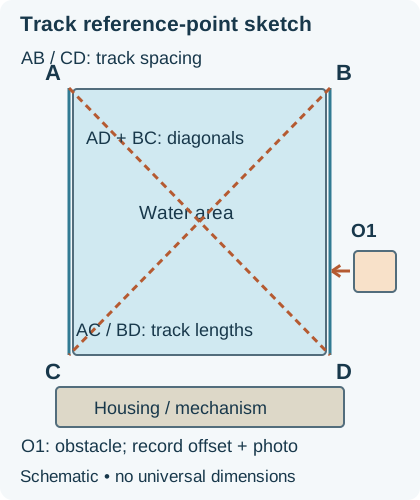
Measure the system, not the water
- Track length. Measure from the housing end to the far end, along the line each track will actually run. On undertrack systems that follows the coping. On deck-track systems it lies outside the waterline. The families are compared in track types.
- Track spacing. This is the width between track lines. It sets fabric width, and is an input to the selected mechanism and housing requirements. That chain is in the vault guide.
- The square check. Use A/B/C/D below consistently: compare AD and BC, confirm tracks AC and BD are parallel, and check AB/CD, AC/BD and right angles to the housing by the manufacturer method. Equal diagonals alone do not establish an acceptable rectangle.
- Housing space. Record depth, width, and height available at the mechanism end (vault interior on a new build, bench or housing footprint on a retrofit), plus where its drain and power can come from.
- Elevations. Note coping thickness, deck level changes, and raised walls or spa edges along the track path. Acceptance is system-specific; record each change for the installer.
- Obstructions. Rails, ladders, jets, slides, planters, boulders: photograph each with a tape in frame, and mark them on the sketch.
Takeaway: Record discrepancies without deciding whether the system can absorb them.
Record the measurement package
A manufacturer’s public Aquamatic order form (undated) records track space and length with ft/in and mm fields, drive-end orientation and lid choice. Its Hydramatic skew sheet concerns operating cover alignment, not permission to install nonparallel tracks. The Save-T 3 overview, 800024 Rel-0024 (2015), PDF pp. 6–7, checks track lengths, spacing, diagonals and squareness to the housing; get the selected model’s current form and acceptance criteria.
Scroll horizontally to read all columns.
| Measurement | Value / unit | Reference points | Photo ID |
|---|---|---|---|
| Track lengths | ___ / ___ | AC / BD | ___ |
| Track spacing at both ends | ___ / ___ | AB / CD; method per form | ___ |
| Diagonals | ___ / ___ | AD / BC | ___ |
| Housing and service space | ___ | Inside box / drive end | ___ |
| Levels / obstruction offset | ___ | Coping / O1 / track | ___ |
Use one unit system consistently, label any conversion, and include the drawing revision and measurement date.
Keep the labeled plan, measurements and photos of each track end, side, housing and obstruction together. Put the whole package into the cover coordination checklist so measurement, decisions, and sign-offs travel as one document.
Takeaway: Keep units, points and photo IDs on the same record.
Where your tape measure’s job ends
Owner measurements support a preliminary feasibility review. The ordered system is still manufactured from the installer’s or manufacturer’s own verified measurement, and that responsibility should stay with them. Have the installer verify the final order dimensions, datum and tolerance before manufacture. Takeaway: Preliminary measurements do not release an order.
Frequently asked questions
Why not just send the pool's length and width?
Because the fabric rides on tracks, and the tracks sit outside or under the edge depending on the system. Two pools with identical waterlines can need different fabric widths and drum sizes. Installers quote from track geometry, so measuring anything else just schedules a second visit.
How do I check whether the pool is square?
Use the same four labeled track reference points for both diagonals. Confirm parallel tracks, corresponding endpoints, side lengths and right angles using the selected manufacturer method. Equal diagonals alone do not accept an arbitrary quadrilateral. Record discrepancies for installer review; do not assume a small skew can be accommodated.
What counts as an obstruction?
Anything the track or fabric path meets - ladders and rails, raised walls or spas, deck jets, slides, planters, boulders, and elevation steps in coping or deck. Each one is either relocated, engineered around, or accepted as a limit. Photograph everything and let the installer decide which.
Sources
- Automatic pool cover order form (undated), track space, length, drive end and lid fields — Aquamatic
- Save-T 3 / Autosave general installation overview, 800024 Rel-0024 (2015), PDF pp. 4–7, 10, 14–16 — Cover-Pools
- Hydramatic skew adjustment / cover alignment sheet (undated), operating alignment, not site geometry acceptance — Aquamatic