Key takeaways
- The drive layout decides power and hose paths; both unit and pool-end service access need coordination.
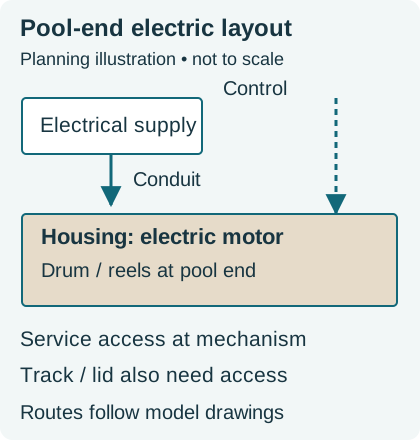
- For a pool-end electric layout, confirm the motor, circuit route and service clearances from the model documents.
- A hydraulic powerpack may be remote or in the bench housing; the hydraulic motors remain at the mechanism.
- Whichever drive is chosen, its circuit or hose path must be on the drawings before concrete closes the route.
A misplaced drive route can require trench or deck alterations. Choose from the selected models’ layout and maintenance documents before concealing routes. This is a comparison of public documentation, not our testing; start with the cover planning hub.
Scroll horizontally to read all columns.
| Check | Pool-end electric layout | Hydraulic powerpack layout |
|---|---|---|
| Drive location | Electric motor at mechanism | Hydraulic motors at mechanism; powerpack location per manual |
| Route | Approved electrical / control conduit | Hydraulic hoses plus electrical / control routing |
| Maintenance access | Motor, drum, reels, track and lid | Powerpack plus pool-end motors, manifold, drum, reels and track |
| Duty / span | Obtain selected model rating | Obtain selected model rating |
| Route length | Electrician verifies permitted run | Installer verifies hose run and powerpack requirements |
Short conclusion: Choose the model whose documented duty, routes and service spaces fit the project. A remote pump is not a remote cover mechanism.
How the two systems are arranged
A manufacturer’s public T4 Versa owner manual, 800235 REL-0001 (2020), shows the pool-end motor and lists motor, mechanism and track maintenance. The Hydramatic Toptrack manual (2007) shows hoses linking the pool-end drive to a powerpack, with remote or bench placement. The Hydramatic owner manual includes recess, guide and slider maintenance; the pool-end assembly remains accessible work.
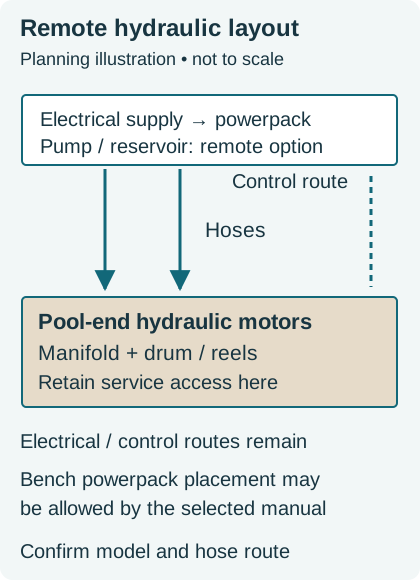
Takeaway: A remote hydraulic powerpack still requires pool-end access and a verified control route.
How to choose
Check three items with the installer:
- Rated duty: ask for written compatibility with cover dimensions and expected use. Do not infer a long-span or cycling rating from the drive family.
- Actual route length: record the conduit or hose path, bends, powerpack position and control route; confirm permitted limits for the model.
- Maintenance access: retain clear access at both the unit and pool-end mechanism. The manuals cited are layout examples; obtain the applicable current installation document before approval.
Whichever way it goes, the drive’s demands join the vault, drainage, and track items in automatic pool cover planning, and its circuit or pad space becomes a row in the equipment schedule.
Takeaway: Compare actual model ratings and measured routes before choosing the drive.
Getting it onto the drawings
Reserve the conduit or hose route, the circuit or pad space, and service access at the mechanism end, and record all of it in the cover coordination checklist with the manufacturer’s actual requirements. The wet-side geometry (vault size, drainage, and lid access) is covered further in vaults, drainage and power.
Takeaway: Record both ends of the service-access requirement, along with the route.
What stays with the professionals
Circuit sizing, bonding, and code clearances belong to a licensed electrician and your inspector. Hydraulic specifics belong to the system’s installer. The planning job is to pick the drive family early enough that its path through the concrete exists.
Frequently asked questions
Which drive type is better for a home pool?
Compare the model rating for the proposed cover size and use, route constraints and maintenance access. A remote hydraulic powerpack may suit the site, but it still leaves pool-end motors and moving parts to service. Neither drive family is the default recommendation here.
What does each drive need during construction?
Electric needs a dedicated circuit and conduit run to the mechanism end, installed to electrical code. Hydraulic needs the permitted powerpack space, at a remote location or in the bench where the manual allows it, plus hose runs to the mechanism. Both need those paths reserved before the shell and deck close them, alongside the vault and its drainage.
Does drive choice change daily use?
Controls, travel time, end stops and maintenance depend on the selected product. Compare those model documents instead of assuming equivalent speed or controls from the drive family alone.