An unclear watering handoff can delay the next trade and leave gaps in a pool shell’s curing record. Use the project’s written moisture requirement, name the person maintaining it, and record coverage and interruptions before requesting a separate finish-release decision.
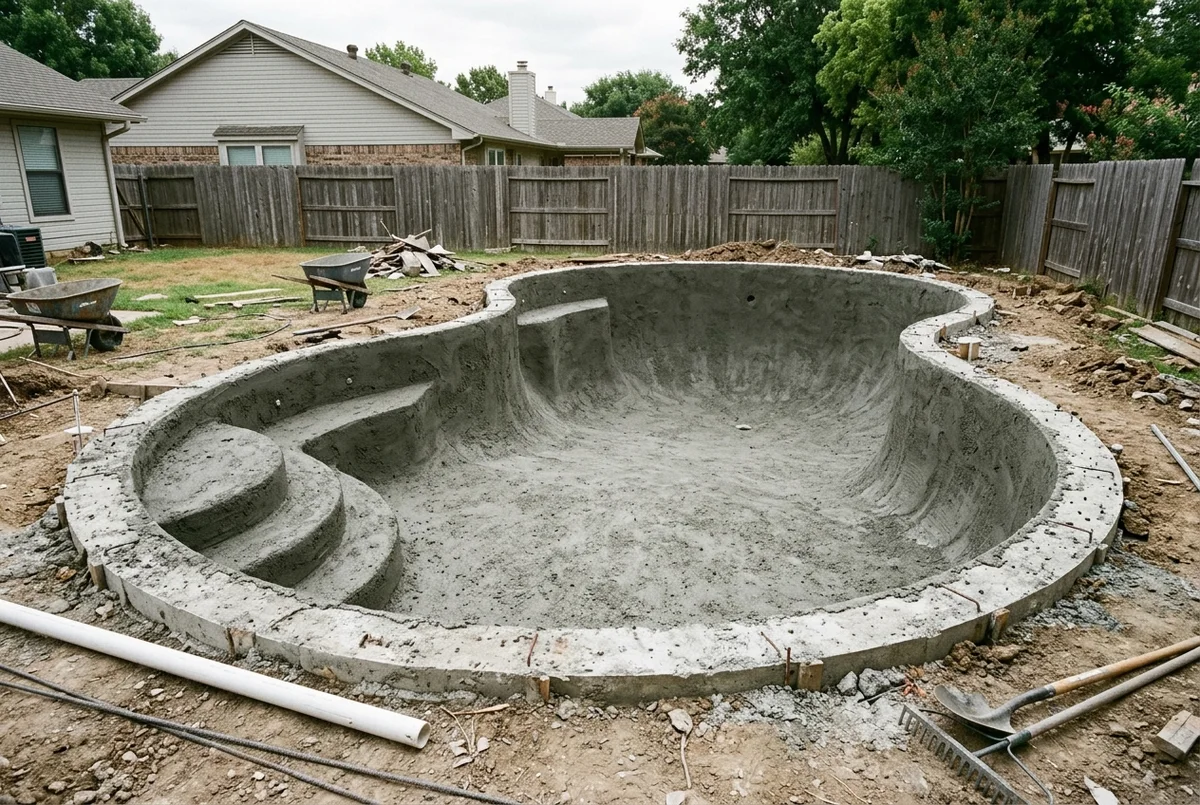
A gunite watering schedule needs to explain the surface condition to maintain, how the chosen method maintains it between checks, and who responds when conditions change. ASA recommends continuous wet curing and gives climate-dependent soaking examples; a visit count alone cannot document the required condition. This guide provides a blank curing handoff and observation log you can copy into project notes, plus a fictional example of an unknown interval. It covers newly placed gunite and wet-mix shotcrete shells; your project documents control the work.
Scroll horizontally to read all columns.
| Input or item | Typical value or source | Why it matters |
|---|---|---|
| Required moisture condition | Written shell-curing instruction; ASA’s continuous-wet definition is explained below | States what the method must maintain |
| Method, start and duration | Approved project instruction and revision | Establishes the actual plan, including protection and stopping criteria |
| Observation zones and responsibility | Shell layout, named curing owner and backup | Prevents one wet area or one person’s visit becoming a record for everything |
| Finish release | Selected finish-system instructions and project decision-maker | Separates shell care from permission for the next trade |
Use the pool construction hub to place this record among the other shell-stage decisions.
What does ASA mean by a gunite watering schedule?
Read the required moisture condition alongside the frequency examples, then have the project team reconcile its written plan. ASA’s hydration FAQ recommends at least 7 days of continuous wet curing: the exposed surface stays wet throughout the period. Two visits a day do not establish that condition.
ASA’s pool-curing position statement, printed page 37, calls for continuous moisture immediately after finishing for at least 7 days. It describes 3–5 soakings daily or more initially, with initial frequency dependent on climate or region. It then describes at least daily water curing from day 7 to day 28, followed by 1–2 wettings weekly until interior coating and filling. These are ASA’s published recommendations, not an approved calendar for your shell. Ask how your project’s method maintains its required condition between visits and who adjusts it for the actual exposure.
Keep three questions separate:
- Curing: What moisture and protection conditions must the placed shell receive?
- Strength evidence: What do the specified specimens and test age establish? Use the pool-shell strength and test-record guide for that record chain.
- Finish release: What must the selected system’s receiving surface satisfy, and who decides it is ready?
A passed strength result does not document every exposed surface’s curing history. Nor does the calendar establish finish readiness.
Agree the curing handoff before responsibility changes
Get a written instruction with a named owner and backup before anyone assumes the owner will handle watering. If the instruction gives only a frequency, request the required condition, coverage, monitoring and response to changing weather. Have the responsible contractor resolve conflicting instructions with the project’s designer and finish supplier.
Copy this blank handoff into the project notes. Fill it from the approved documents; leave an unanswered requirement pending, rather than supplying a number from another project.
Scroll horizontally to read all columns.
| Handoff field | Project entry — blank until confirmed |
|---|---|
| Project / shell identifier | __________ |
| Placement date and time | __________ |
| Instruction document / revision / issuer | __________ |
| Specified method and required moisture condition | __________ |
| Start instruction and duration or documented completion criterion | __________ |
| Observation zones, including walls, floor, steps, bench and upper edge where present | __________ |
| Means intended to maintain the condition between checks | __________ |
| Curing responsible person, contact and backup | __________ |
| Weather / protection instructions and who can revise the plan | __________ |
| Interruption reporting contact and required response | __________ |
The new-pool project checklist can hold the responsibility assignments alongside the rest of the construction documents. The table organizes instructions; it is not a replacement specification or an inspection certificate.
Observe coverage and weather between watering visits
Describe each accessible zone and the period actually observed; a wet floor does not describe the upper wall or a step riser. Agree observation locations with the curing owner, and record areas you cannot see. Observe from the access arrangements the construction team approves.
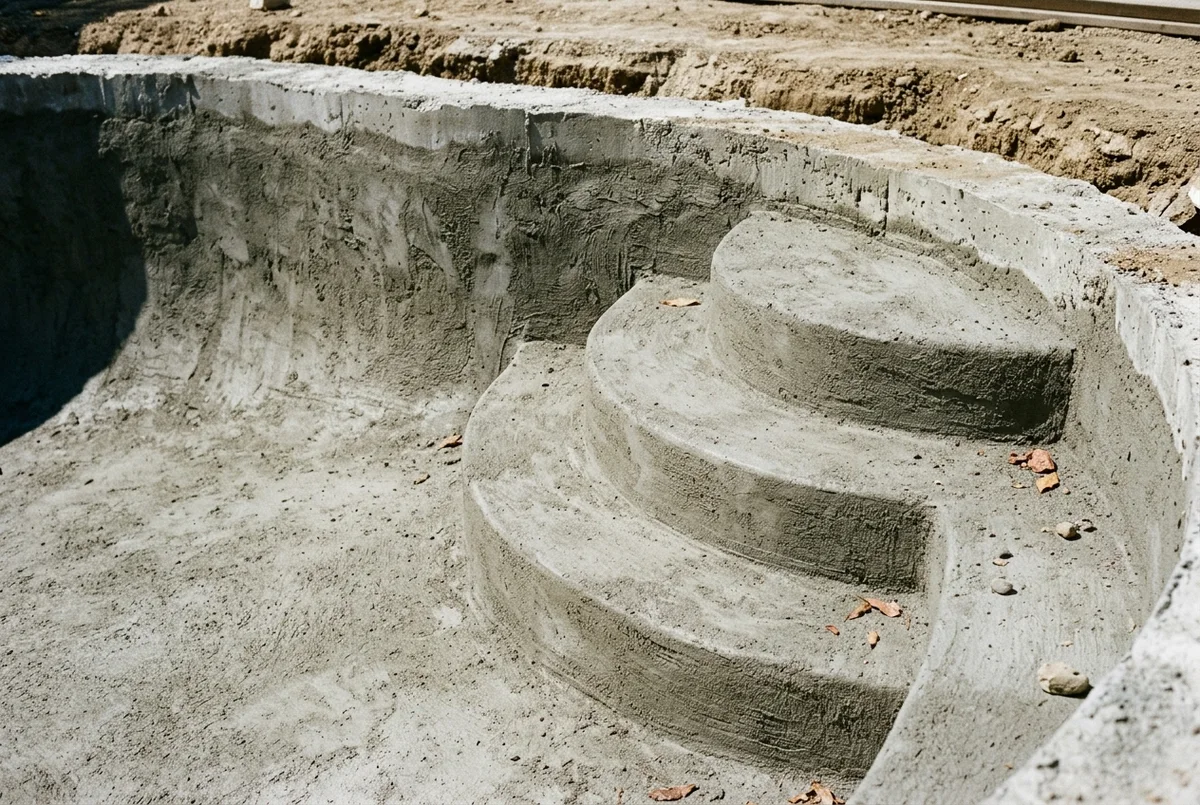
Keep weather observations tied to the time and location: wind picked up, a wall moved into direct sun, or rainfall occurred during part of the interval. Do not invent weather measurements. A forecast or a report that it rained does not establish continuous coverage of every exposed surface. ASA’s response to a Florida owner’s missed-curing question explains the increased risk from inadequate curing with hot, dry or windy exposure; it cannot diagnose another pool.
If the observed condition differs from the instruction, notify the named curing owner and record the response. Ask whether the method or monitoring needs revision. Do not choose a Florida or California schedule merely because the project shares a state name.
ASA discusses wetted coverings and moisture-retaining sheets as alternatives in its pool statement. The contractor must specify a suitable method and its compatibility with later work. A photograph of damp concrete, or a covering in place, is not proof of continuity beneath it or during an absence.
Record interruptions without guessing at the missing hours
Write “not observed” when an interval is unknown, and keep it open until the responsible team records its disposition. Record a known interruption as an interruption. Watering later does not provide evidence about an earlier unobserved period.
Repeat the blank record below for each observation or interruption. Its fictional example demonstrates wording only: it is not a real project, measured result, recommended check interval or approval.
Scroll horizontally to read all columns.
| Observation field | Blank record | Fictional example — wording only |
|---|---|---|
| Project / shell identifier | __________ | Example shell |
| Observation date / time and observer | __________ | Afternoon check by owner; enter actual date/time in a real record |
| Zones and observation method | __________ | Upper wall and step riser viewed from agreed outside position; other zones not observed |
| Observed moisture / coverage | __________ | Surface appearance recorded at this check only; continuity not established |
| Weather observed | __________ | Wind picked up during the check; no measured weather data |
| Interval continuity / known or unknown gap | __________ | Upper-wall condition not observed during owner’s absence |
| Action and person notified / notification time | __________ | Contractor notified of missing observation; enter actual notification time |
| Response / revised instruction reference | __________ | Response pending; no replacement instruction recorded |
| Open item / status / next owner | __________ | Unknown interval remains open with curing responsible person; release pending |
Use not applicable only where a field does not apply, and explain why. A photograph can help locate a concern; it cannot fill the missing hours. If a gap raises questions about shell condition, collect the available records for the project’s responsible designer. Do not classify cracks, specify a repair or commission invasive testing from this log alone.
Check finish readiness separately from strength age
Obtain the selected finish system’s preparation and release requirements, then identify who accepts the receiving surface. ASA’s cure-time FAQ directs readers to the coating supplier for the duration and properties required before coating.
The pool statement, printed page 36, describes typical ACI/ASA curing criteria of 7 days or 70% of specified 28-day compressive strength. Separately, it attributes 28 days of moist curing before cementitious finishes to ACI Committee 524 and NPC. These are ASA’s accounts of distinct recommendations; the underlying ACI/NPC documents were not independently reviewed for this guide. Have the project team resolve the applicable requirements. Neither statement gives an owner authority to stop curing or book a finish automatically on a particular day.
If a curing compound was used, ASA says it must be removed before subsequent coatings to achieve adequate bond. Record the actual preparation required by the selected system; do not choose a generic removal procedure. For tile and membrane interfaces, use the waterline tile and coping waterproofing checklist to identify the separate substrate and product questions.
Scroll horizontally to read all columns.
| Separate finish-release field | Project entry — blank until confirmed |
|---|---|
| Selected finish / coating / membrane system | __________ |
| Supplier instruction document / revision and applicable duration / properties | __________ |
| Required receiving-surface preparation, including curing-compound disposition | __________ |
| Required project evidence, including strength reports only where specified | __________ |
| Unresolved curing intervals, surface questions and assigned actions | __________ |
| Person authorized to decide, decision / conditions and actual decision date | __________ |
Keep the release pending while its required evidence or decision is missing. This record concerns the unfinished shell; filling and start-up after the interior finish have their own instructions.
Carry the open items to the next construction stage
Take the written plan, actual observations and unresolved items to the person responsible for the next decision. Ask that person to connect any approval to its supporting documents, conditions and date. An empty release field or an unanswered message is not approval.
Before the next trade is booked, check that the curing owner has the current instruction and backup, that gaps have a recorded response, and that the finish decision has its own evidence. Return to the construction stages guide and the pool construction hub to coordinate the next stage with your project engineering documents.
Method and sources
Updated October 2026; source passages checked October 15, 2026. This guide synthesizes ASA’s pool-curing position statement and technical FAQs. The position statement’s visible edition is Summer 2021; the FAQ publication dates are not established. The source list identifies the sections and their limits. References to ACI and NPC are attributed through ASA, not presented as independently reviewed standards or local code requirements.
The blank tables and fictional example are original editorial record aids. They report no field testing, measured weather, shell diagnosis or project acceptance by Fielder Pools. They do not specify cast-in-place, fiberglass or liner-pool care. Keep the completed record with the actual project instructions and obtain project-specific decisions from the responsible team.
Sources
- Position Statement 7: Curing of Shotcrete for Swimming Pools — American Shotcrete Association
- Guidelines for hydration of shotcrete — American Shotcrete Association
- What is the cure time for shotcrete? — American Shotcrete Association
- Florida owner's question about omitted gunite curing — American Shotcrete Association