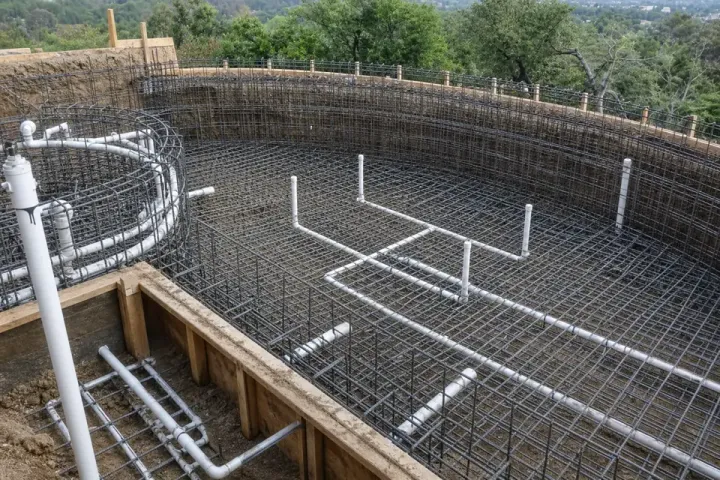
Direct answer
Before waterline tile and coping conceal concrete, obtain a written assembly detail showing membrane extent, compatible bonding materials, finish transitions and movement joints. Check the exact products' pool and submersion instructions. A waterproof label or coating at the waterline does not establish a complete system; current LATICRETE guidance discourages waterline-only waterproofing in submerged applications.
Key takeaways
- Review the membrane's extent and finish interfaces before accepting a waterline-only proposal.
- Check both material classifications and the exact product's written submerged-use and compatibility statements.
- Separate moisture-carried efflorescence from pool-water mineral deposits; neither epoxy nor a membrane guarantees a clean waterline.
- Get coping support and movement-joint details from the responsible project team, without borrowing generic dimensions.
- Keep application, testing and final filling approvals as separate records tied to the installed materials.
Repairing a hidden waterline or coping defect can be costly when finishes must be removed. Before tile and stone cover the concrete, obtain a written assembly detail and the exact products’ compatibility and acceptance records.
For waterproofing a waterline tile band on a concrete pool, review how the band connects to the specified water-containment system before choosing a coating. Identify the membrane’s extent, tile adhesive, grout, coping support and flexible joints, then check their written pool-use instructions together. Current LATICRETE guidance discourages waterproofing confined to the waterline in submerged installations. This guide gives owners document checks and a retainable review record; the responsible project team determines the design, application requirements and permission to proceed.
Scroll horizontally to read all columns.
| Input or item | Typical value or source | Why it matters |
|---|---|---|
| Membrane extent and terminations | Current project cross-section and exact membrane instructions | Shows continuity and finish interfaces |
| Water-pressure exposure | Designer’s assessment of pool-side and ground-side conditions | Checks whether product limitations affect the proposal |
| Membrane classification | Exact product data; ANSI A118.10 and A118.12 declarations where specified | Separates waterproofing from crack isolation |
| Tile and bonding material | Tile/backing approval and submerged-use mortar or adhesive data | Checks the actual material combination |
| Grout and flexible sealant | Separate product sheets and joint detail | Prevents rigid grout replacing a movement joint |
| Coping support and projection | Designer’s detail and stone supplier’s applicable requirements | Establishes support without borrowing a generic overhang |
| Application and weather record | Installer’s product-specific checks and conditions | Connects instructions to the work performed |
| Testing and final filling | Separate written requirements and release records | Prevents one cure statement authorizing every later stage |
Use the pool construction hub for surrounding planning decisions and the concrete-pool construction stages guide to place this review before finishes conceal the work.
Does waterproofing only the waterline create a complete system?
A waterline coating establishes a complete system only if the applicable design and manufacturer instructions support its extent and interfaces. LATICRETE’s current pool guidance discourages waterproofing confined to the waterline in submerged applications. Ask for the proposed assembly’s continuity detail, pressure exposure and finish compatibility before treating a narrow coating band as sufficient.
LATICRETE’s TDS 192, revised March 30, 2026, calls for continuity in its submerged membrane systems and advises against limited-area application. The US liquid HYDRO BAN data sheet, DS-663-0926, repeats that limitation. These statements describe the manufacturer’s systems; they do not establish that every concrete pool must use the same waterproofing approach.
A proposal reading “waterproof the tile line” leaves important questions unanswered. Where does the membrane start and stop? How are corners, openings and adjoining finishes treated? What contains water elsewhere in the pool? Have the designer identify those boundaries on the drawing and explain how the selected materials meet at them.
Continuity also does not mean extending any product under every finish. The September 2026 liquid HYDRO BAN sheet says it is not for use beneath cement or other plaster finishes and directs consultation with the plaster manufacturer. A tiled-to-plastered transition therefore needs a resolved detail. A drawing for a differently named membrane cannot approve that pairing.
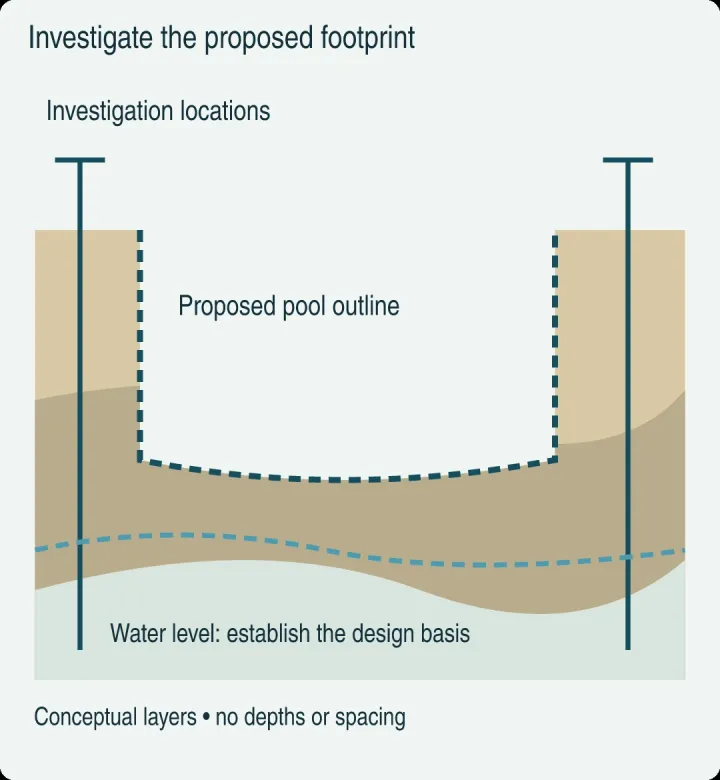
Pressure direction is another check. The same liquid HYDRO BAN sheet excludes negative hydrostatic pressure: water pressure acting from behind the coated surface. A statement that a membrane holds pool water does not establish that it resists groundwater pressure. Use the ground investigation and excavation planning guide to organize the relevant site information, then obtain the designer’s resolution for the proposed system.
Common mistake: Accepting “two coats behind the tile” as proof of waterproofing continuity, without a current detail showing its boundaries and approved adjoining finishes.
Takeaway: Retain a drawing and written resolution of the membrane’s extent, finish transitions and pressure exposure.
What does each material do beneath the tile and coping?
Review the assembly as separate materials with separate jobs: the prepared substrate supports bonding, the specified membrane controls water and permitted crack movement, the adhesive bonds tile, grout fills ordinary tile joints, and flexible joint materials accommodate specified movement. A standard designation or waterproof label on one layer does not approve the entire assembly.
The TCNA public ANSI standards list, checked October 10, 2026, identifies different categories. A118.10 concerns bonded waterproof membranes; A118.12 concerns crack-isolation membranes; A118.15 concerns improved modified dry-set cement mortar. A118.3 covers epoxy setting and grouting materials. These are category descriptions from the public list, not a reading of the complete standards or a universal pool-use approval.
Scroll horizontally to read all columns.
| Layer or component | Evidence to request | What that evidence does not settle alone |
|---|---|---|
| Concrete and any render | Preparation, condition and repair record under the selected system | Approval of structural cracks or every coating |
| Waterproof/crack-isolation membrane | Exact data sheet, specified category, extent and application record | Suitability for all pressure directions or finish interfaces |
| Mortar or adhesive | Exact submerged-use statement and tile/membrane compatibility | Vessel waterproofing or coping support |
| Tile and mosaic backing | Tile-maker approval for the actual mounted product and exposure | Compatibility based only on the tile face |
| Grout | Exact product, exposure and finish-compatibility requirements | Replacement of a membrane or flexible joint |
| Movement-joint materials | Sealant, primer/backer requirements and current joint detail | Permission to omit underlying or perimeter joints |
For epoxy grout, distinguish tile-bonding epoxy adhesives, such as LATAPOXY 300 Adhesive, from joint-filling products. LATICRETE’s TDS 192, dated March 30, 2026, lists SPECTRALOCK PRO Premium Grout and SPECTRALOCK PRO Premium Translucent Grout separately from epoxy adhesives and warns that exterior UV exposure may discolor these grouts without affecting performance. Check the exact grout’s submerged-use approval, outdoor UV/color limits and compatibility with the selected tile or stone finish. Retain its cure requirements for chemical resistance before final filling; TDS 192 treats that as a separate condition. Confirm current product-specific instructions rather than applying the named products’ provisions to every epoxy grout or using a membrane test interval as permission to fill the pool.
LATICRETE’s 254 Platinum sheet, DS-677-0626, illustrates the distinction: it separately declares A118.15 performance and exterior/underwater use. The standard number is one statement; the exposure approval is another. The same sheet says mortars and grouts do not replace waterproofing membranes where those are required.
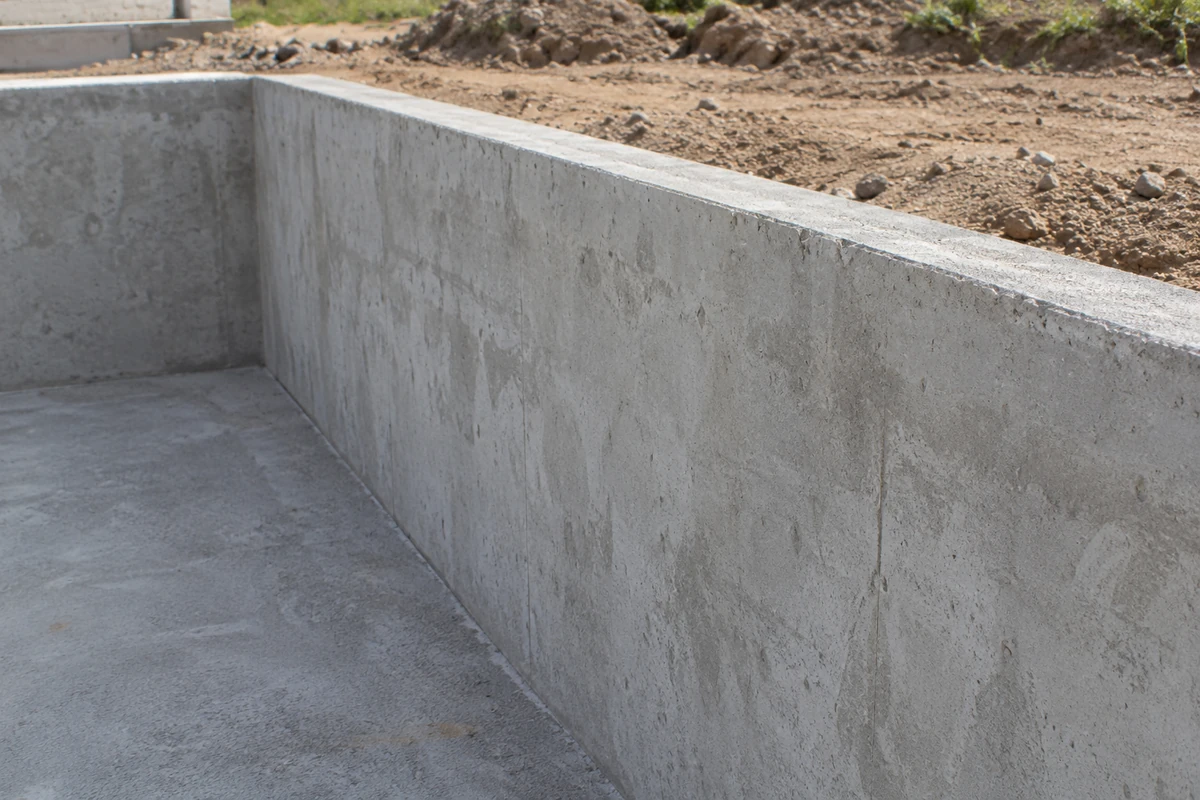
Before the first concealed layer, ask the contractor to document substrate preparation, repairs and acceptance under the chosen instructions. TDS 192 identifies contamination and surface defects as concerns. A clean-looking photograph helps locate the work but cannot establish substrate acceptance, bond suitability or a membrane’s film thickness.
For mosaics, retain approval for the mounting system as well as the tile. TDS 192 warns that the types and quality of mosaic mounting methods vary and that resulting bond strength may be very low after saturation and chemical attack from pool water. Include exterior and freeze exposure when applicable. The pool materials hub supplies broader material-planning context; the selected product’s manufacturer must establish its suitability for this assembly.
Takeaway: Build a material schedule that assigns each layer its job and records approval for its actual neighbors and exposure.
Basecrete vs HYDRO BAN: what do the documents establish?
Compare Basecrete Original and US liquid HYDRO BAN by their exact documents and unresolved project questions. Both inspected documents name swimming pools, but they describe different materials and instructions. This comparison is based on public documents accessed October 10, 2026, rather than our testing, and it does not rank performance, value or durability.
The Basecrete Original instruction sheet is version 1.5 and has no printed calendar revision date. The liquid HYDRO BAN data is coded September 2026; its installation instructions are coded December 2024. Retain the current documents supplied for the project and ask the manufacturer to resolve any difference between instructions, drawings or the proposed application.
Scroll horizontally to read all columns.
| Document check | Basecrete Original: version 1.5, undated | US liquid HYDRO BAN: September 2026 data / December 2024 instructions |
|---|---|---|
| Material identity | Liquid-plus-compound waterproofing bond coat | Single-component liquid polymer waterproofing/crack-isolation membrane |
| Written pool reference | Swimming pools listed in applications | Swimming pools listed, subject to stated limitations |
| ANSI membrane declarations | A118.10/A118.12 classification not established by the inspected English instruction sheet; request current evidence if specified | Manufacturer declares A118.10/A118.12 performance; exposure and system limits still apply |
| Application record | Its own mixing, substrate, build and interval instructions | Its own substrate, wet/dry film and drying checks |
| Cracks and movement | Crack/cold-joint instructions need reconciliation with the project condition and joint design | Structural/vertical/dynamic movement limits and separate movement-joint treatment |
| Ground-side pressure | Rating not established by the inspected sheet; request confirmation | Negative hydrostatic pressure excluded |
| Finishes and filling | Request approval of the selected tile/plaster/bonding combination and final fill readiness | Check finish restrictions and reconcile membrane, mortar, grout and filling requirements |
“Not established by this sheet” means a document gap, rather than a finding that Basecrete lacks other tests or fails a standard. Request the missing evidence from the manufacturer. Conversely, an explicit HYDRO BAN declaration does not approve a product substitution or override its limitations.
Coat count is a poor comparison metric. Basecrete’s sheet describes its own mix, total build and second-coat interval, with an environmental caveat. Liquid HYDRO BAN specifies film checks and drying conditions. Copying one product’s thickness, preparation or interval into the other’s application record would erase the conditions that make the instructions meaningful.
Use full product names on submittals. Basecrete Original is not interchangeable by name with another Basecrete variant; liquid HYDRO BAN is not HYDRO BAN Cementitious, XP or Quick Cure. Ask for written confirmation when combining brands or using a detail prepared for a different product. No strength, lifespan or warranty comparison is established here.
Takeaway: Choose from documented project compatibility, and label missing evidence as an open question rather than a product verdict.
Can a membrane prevent calcium and efflorescence at the waterline?
A membrane can address a specified moisture path, but it cannot establish the cause of every white deposit or guarantee a deposit-free waterline. Separate salts carried through cementitious work from mineral deposits associated with pool water. Ask which mechanism the proposed assembly addresses before accepting a blanket calcium-prevention claim.
LATICRETE’s efflorescence guidance, TDS 159, revised July 23, 2026, describes soluble material, water and transport to a surface where drying leaves residue. Cementitious materials and ground salts can contribute. The document identifies drainage and material selection as ways to reduce risk, while explicitly withholding a total-elimination guarantee for epoxy setting materials.
TDS 192 also discusses pool-water balance and mineral deposits. The editorial implication is that similar-looking white marks can require different investigations. A waterline photograph alone cannot determine whether a deposit came from behind the tile, the coping bed or the pool water.
Scroll horizontally to read all columns.
| Observation or claim | Record to obtain | Question it helps resolve |
|---|---|---|
| White residue on coping or grout | Location, recurrence and rain/wetting observations | Is there an identifiable moisture route through the assembly? |
| Deposit following the waterline | Maintenance and water-condition records plus site assessment | Could pool-water deposition be involved? |
| Residue beside an interface | Current drainage/termination detail and installer review | Does water management at that boundary need investigation? |
| “Epoxy stops all calcium” | Exact product statement and identified deposit mechanism | What does the material address, and what remains outside its role? |
Keep drainage review separate from a generic instruction to slope or seal the stone. Ask how the designed pool edge manages rain and splash water and how that detail relates to the membrane and finish. This guide gives no coping slope or chemistry targets. Use the pool care hub for the maintenance decision path and the hot-climate pool planning guide for broader heat and exposure planning.
Common mistake: Treating every white mark as groundwater salts and replacing a coating before identifying the source and moisture route.
Takeaway: Record the deposit pattern and relevant water conditions, then obtain a diagnosis before accepting a prevention or repair claim.
What should the coping overhang and movement-joint detail show?
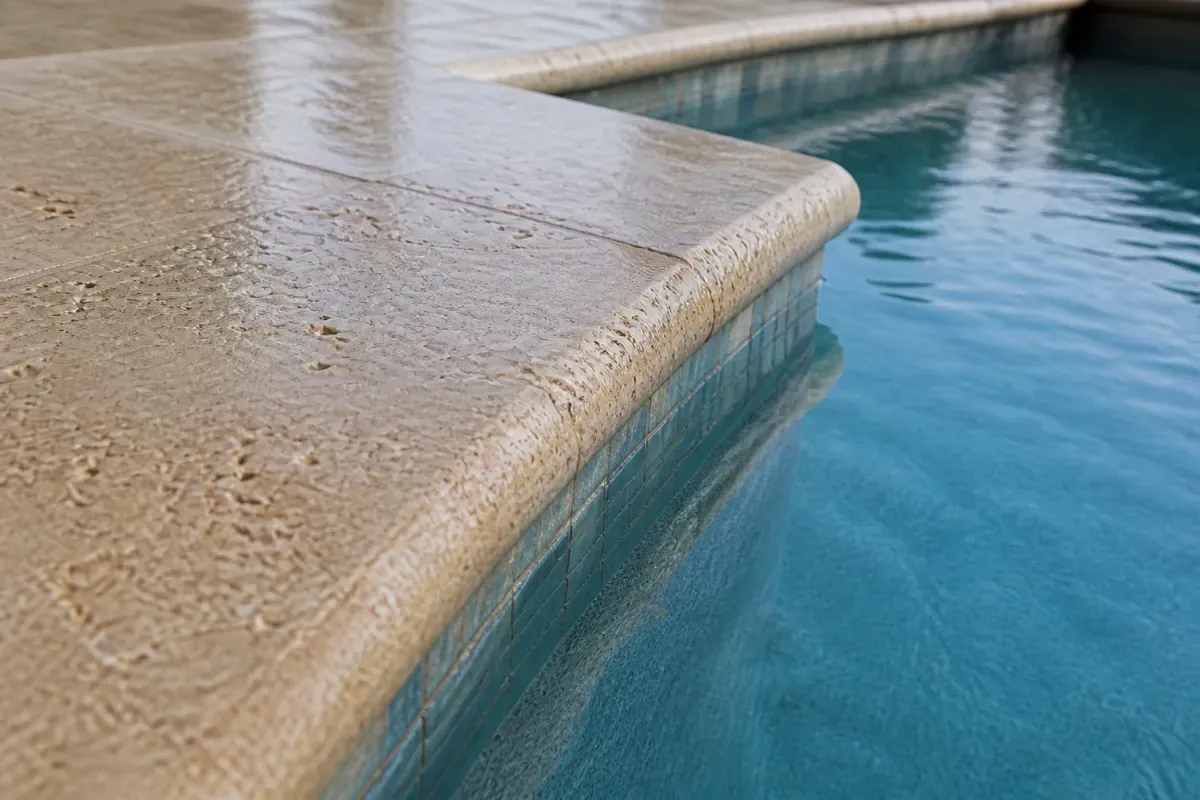
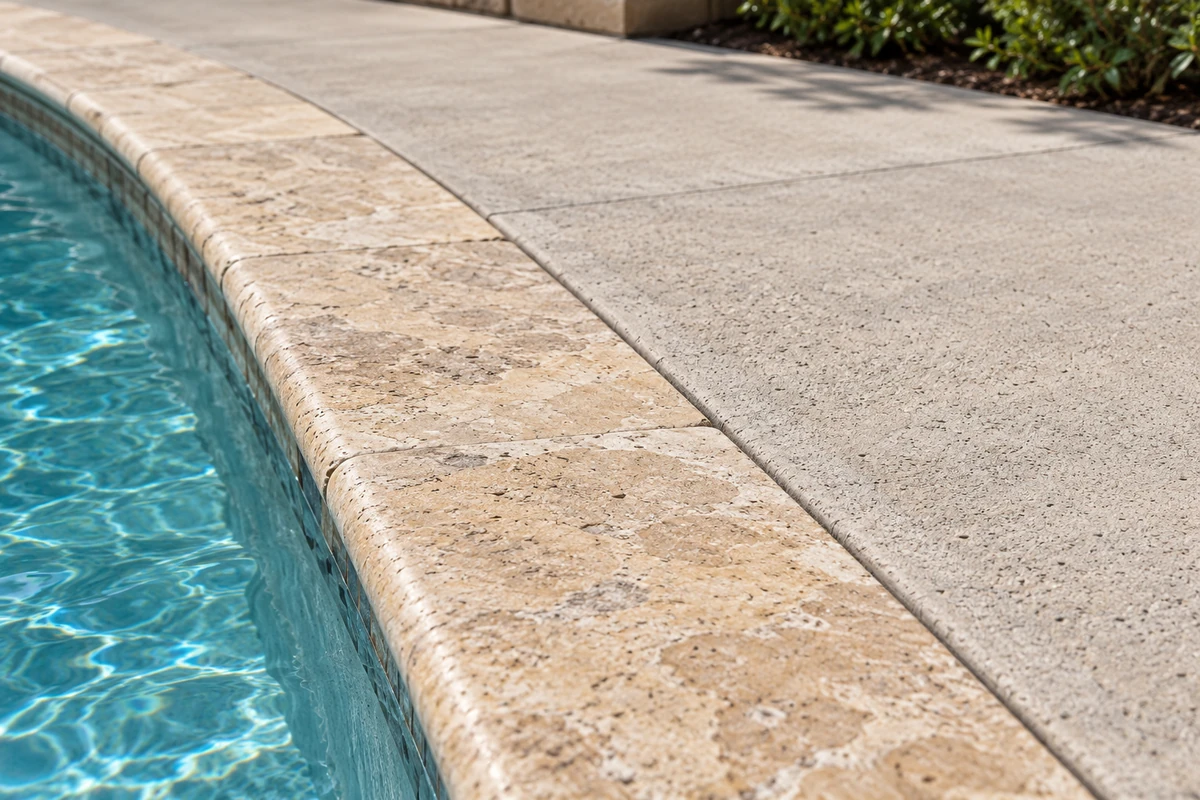
Ask the responsible designer to show coping support, any unsupported projection, water-management geometry and movement-joint boundaries. Stone, substrate and exposure determine the applicable detail; a membrane cannot establish that an overhang is safe. Keep flexible joints and their submerged-use sealant requirements separate from ordinary grout and the membrane’s limited crack-isolation function.
The TCNA crack-isolation FAQ, accessed October 10, 2026, says crack-isolation membranes do not eliminate expansion joints. It relates joint placement to exposure, temperature, moisture and other design factors. LATICRETE’s pool guidance requires suitable submerged-use sealants and the applicable backer, primer and joint treatment. Neither source supplies a generally safe stone coping projection for your pool.
Scroll horizontally to read all columns.
| Interface to review | Question for the project team | Evidence to retain |
|---|---|---|
| Coping support and overhang | Who approved the supported and unsupported portions for this stone and use? | Current detail and material approval |
| Coping/waterline transition | How do membrane termination, bonding and the specified joint meet? | Coordinated cross-section and compatibility resolution |
| Coping/deck boundary | Where is movement accommodated, and which materials remain separated? | Joint layout and detail |
| Flexible joints | Are sealant and any primer/backer suitable for the actual exposure? | Exact product instructions and installer record |
| Rain and splash-water route | How is water managed at the stone edge and adjoining deck? | Project drainage/edge detail |
A cantilevered concrete edge and projecting stone coping should be identified accurately on the drawing. Have the designer determine the support detail rather than borrowing a projection from a photograph of another pool. Do not let a coating selection stand in for that decision.
If an automatic cover is planned, coordinate any track or housing interface before finishing the edge. The automatic cover coordination checklist identifies information the cover supplier and builder need to exchange; the cover track types guide helps clarify which track arrangement is proposed. Those guides do not approve coping dimensions or joint locations.
Takeaway: Obtain the project-specific support and joint detail, with named responsibility for each interface.
What should the owner keep before concealment and filling?
Keep a review record that connects each concealed component to its approved detail, instructions, installer evidence and responsible person. Mark unresolved items explicitly. Membrane testing, tile installation and final filling have separate readiness requirements; a short advertised membrane test interval cannot release the completed pool for filling. This record supports review rather than certifying workmanship.
Copy the table into the project file and enter document identifiers, dates, locations and status. “See photos” is incomplete when the relevant condition is thickness, hidden support or compatibility. Link the photograph to the layer and area it shows, then retain the measurement, instruction or approval that answers the technical question.
Scroll horizontally to read all columns.
| Item | Question to resolve | Evidence retained | Responsible person / status |
|---|---|---|---|
| Assembly and boundaries | Is membrane extent coordinated with adjoining finishes? | Current cross-section, exact product schedule, written interface resolution | Name; open/accepted/date |
| Exposure | Are immersion, exterior/freeze conditions and ground-side pressure addressed? | Designer’s exposure assessment and product limitations | Name; open/accepted/date |
| Substrate | Were preparation, defects and repairs checked under the selected system? | Contractor’s preparation/repair record and located photos | Name; open/accepted/date |
| Membrane | Were build, continuity, terminations, conditions and protection checked? | Current instructions, application/film record and required test record | Name; open/accepted/date |
| Bonding and finishes | Are tile/backing, mortar, grout and any plaster interfaces compatible? | Exact sheets, tile approval and written pairing confirmation | Name; open/accepted/date |
| Coping and joints | Are support, boundary joints, sealant and drainage resolved? | Designer’s details, product approvals and installer record | Name; open/accepted/date |
| Timing and release | Who releases each stage, including final filling? | Separate readiness conditions, completion records and written release | Name; open/accepted/date |
Add these items to the new-pool project checklist so open questions remain visible when the next trade is scheduled. For a change or repair, update the affected area, material identity and readiness record; an earlier accepted application does not automatically cover replacement work.
For timing, distinguish substrate/render readiness, membrane readiness for the specified test, readiness to install finishes, and readiness to fill the completed assembly. The reviewed HYDRO BAN and 254 Platinum documents address different parts of that sequence. Have the project team reconcile all installed materials and actual conditions, and name who authorizes each next step.
Waterproofing acceptance is also separate from circulation-pipe testing. Keep the pre-gunite plumbing pressure-test record in its own scope; it does not establish a tile membrane’s continuity or finish compatibility.
Takeaway: Keep open items assigned, and obtain separate documented releases before concealment and final filling.
When this does not apply
This checklist applies to reviewing concrete-pool waterline tile and coping documents, not to approving a design for every pool type or repairing an active defect. Fiberglass, vinyl liners, unusual substrates, structural or vertically moving cracks, and unresolved groundwater pressure require their own assessment. A retail waterproof coating or this checklist cannot resolve those conditions.
For existing tile replacement, ask what can actually be inspected and retained. An old finish may hide conditions that a new-build application record would have documented. Use the pool renovation hub to organize the remodel scope, then obtain the project’s investigation and repair detail before treating it as a straightforward material substitution.
Takeaway: Escalate changed structures, active defects and unresolved pressure conditions to the responsible project team.
Related reading
Choose the next resource according to the missing project input: construction sequence, owner decisions, ground conditions or a reusable planning tool. These pages help organize the review around this assembly. They do not replace the current membrane, tile, coping or joint instructions required for your specific project and material combination.
- Construction stages guide: locate tile/coping review within the wider construction sequence.
- New-pool project checklist: keep the owner decisions and outstanding documents together.
- Ground investigation guide: organize ground information for the designer’s assessment.
- Pool planning resources: find the site’s reusable checklists and coordination tools.
Takeaway: Use the resource that resolves the missing input, then bring it back to the assembly review record.
Method and sources
This guide synthesizes publicly available manufacturer instructions and TCNA category guidance accessed October 10, 2026. Statements apply to the named documents and products; project-review questions are editorial inferences. We did not inspect a pool, test materials, compare brand performance or read the full paid ANSI standards. The record is an owner planning aid.
LATICRETE sources include TDS 192 (March 30, 2026), TDS 159 (July 23, 2026), liquid HYDRO BAN DS-663-0926 and installation instructions DS-663.5-1224, and 254 Platinum DS-677-0626. Basecrete Original’s instruction sheet is version 1.5 without a printed calendar revision date. Confirm the current documents at the time of the project and resolve any changes with the relevant manufacturer.
Last substantive update: October 10, 2026.
Takeaway: Keep source revisions with the project record and obtain written confirmation for unresolved uses or interfaces.
Frequently asked questions
How to waterproof a tiled pool?
Have the responsible designer and manufacturers establish a compatible assembly for the actual structure and exposure. If the proposal names only a generic coating or conflicts with a product sheet, request the exact product and a reconciled detail, with the unresolved point assigned to a named reviewer before tiling. This owner checklist does not supply an installation recipe.
What is the best waterproof adhesive for swimming pool tiles?
Select an adhesive approved for the actual tile, backing, membrane and submerged exposure. A higher mortar classification alone does not resolve those pairings. Ask for written confirmation if products come from different systems, and keep the adhesive's bonding role separate from specified waterproofing.
What is the best material for waterline tile in a saltwater pool?
Choose tile whose manufacturer approves the tile and its mounting system for the intended pool exposure. Include exterior and freeze exposure where relevant. A material name or saltwater marketing label cannot establish that the backing adhesive, grout and setting materials are compatible.
Will a waterline waterproofing membrane help to prevent cracking or seepage of water at the tile line?
Only within the selected system's documented limits. A crack-isolation claim does not establish structural-crack treatment, movement-joint replacement or resistance to pressure from behind the coating. For an existing defect, record its location and when seepage occurs, then ask the project team which observed condition the proposed treatment addresses.
Is an exterior waterproof membrane automatically suitable under pool tile?
No. Exterior exposure and continuous immersion are separate uses to verify. Check the exact product's pool-use statement, substrate limits and compatible finish materials. A retailer's general waterproof description does not establish approval for a particular concrete-pool assembly.
How should pool tile and coping installation be coordinated?
Give both trades the current interface and joint details before either covers the substrate. Name who approves membrane terminations, coping support, sealant and deck boundaries. Record protection and repair responsibilities when later work can affect an already accepted layer.
Sources
- Installation of Ceramic Tile in Swimming Pools — TDS 192 — 30 March 2026 — LATICRETE Accessed October 10, 2026.
- Efflorescence – Causes, Prevention and Removal — TDS 159 — 23 July 2026 — LATICRETE Accessed October 10, 2026.
- ANSI Standards — public guidance accessed October 10, 2026 — Tile Council of North America Accessed October 10, 2026.
- Crack Isolation / Suppression / Anti-fracture Membrane FAQ — public guidance accessed October 10, 2026 — Tile Council of North America Accessed October 10, 2026.
- HYDRO BAN DS-663 (US English) — DS-663-0926 (September 2026 code) — LATICRETE Accessed October 10, 2026.
- HYDRO BAN DS 663.5 Installation Instructions — DS-663.5-1224 (December 2024 code) — LATICRETE Accessed October 10, 2026.
- Basecrete Original Instruction Sheet — English / Spanish / French — Version 1.5; calendar revision date not printed — Basecrete Technologies Accessed October 10, 2026.
- 254 PLATINUM DS-677 US English — DS-677-0626 (June 2026 code) — LATICRETE Accessed October 10, 2026.